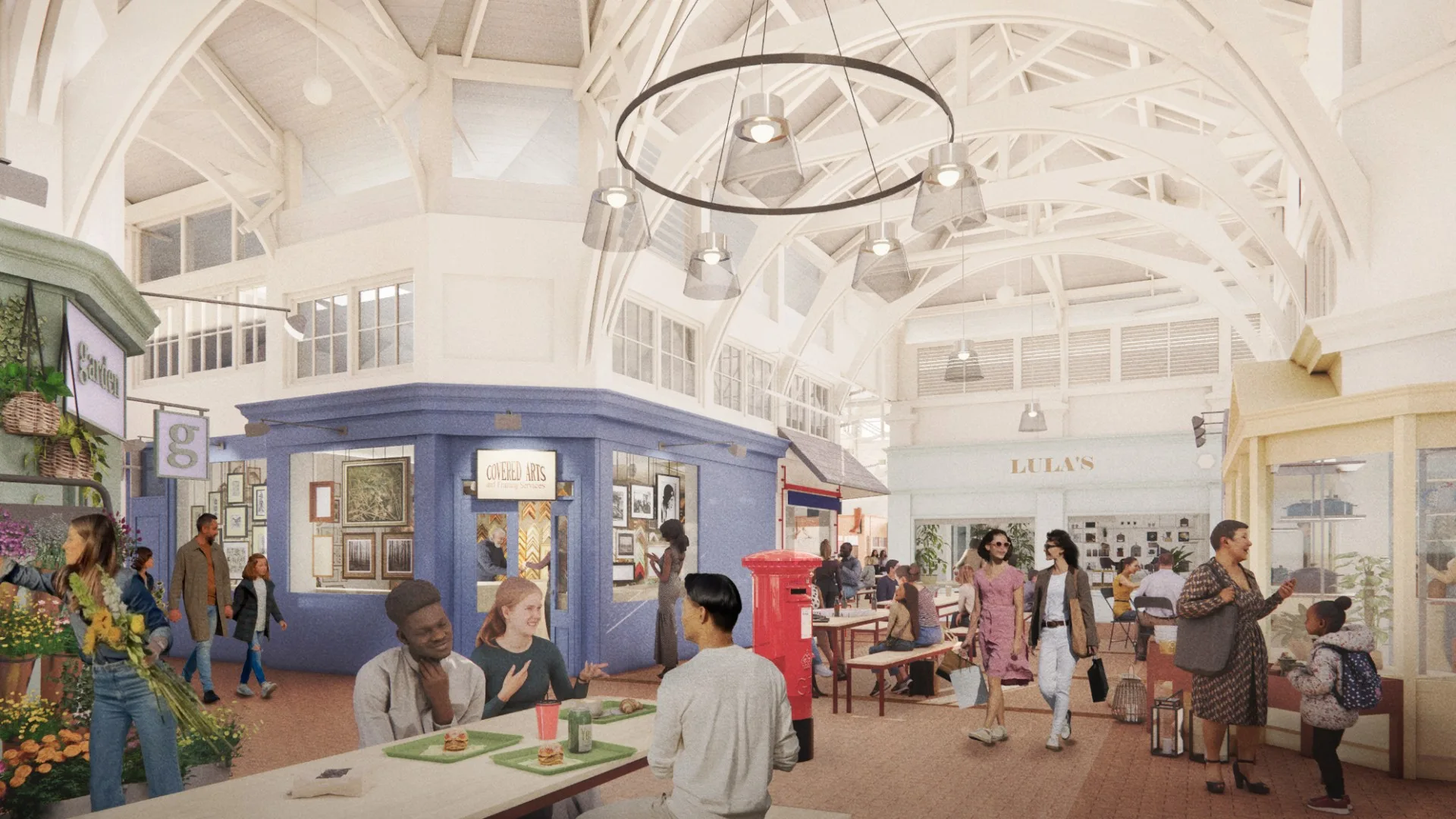
For more than 250 years, the Covered Market has been one of Oxford’s most distinctive spaces — a working market woven into the daily rhythm of the city. Now, it could be set for its most significant transformation in a generation.
Oxford City Council has unveiled a vision for an £8 million programme of essential improvements aimed at upgrading ageing infrastructure, improving accessibility and public spaces, and ensuring the market remains viable for traders and visitors well into the future.
While the market’s familiar character remains central to the plans, the proposals offer a clear contrast between what exists today and what could emerge over the coming years.
A market built on heritage — and in need of renewal
The Covered Market is a rare survivor of Britain’s historic retail landscape: independent traders, narrow walkways, and a sense of density and atmosphere that has changed little in feel, even as the city around it has evolved.
But behind the scenes, many of its core systems are reaching the end of their serviceable life.
The proposals focus heavily on these less visible but essential elements — drainage, electrics, utilities, and public facilities — alongside improvements to lighting, access routes and circulation spaces.
The aim is not to reinvent the market, but to extend its life for decades to come.
What the future vision could look like
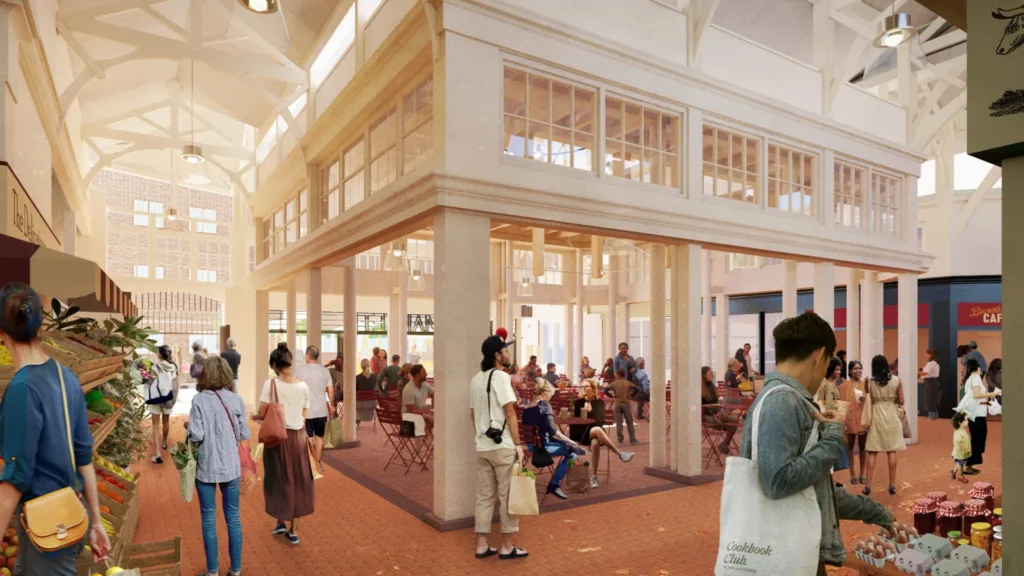
The CGI designs released as part of the consultation suggest a series of carefully considered interventions designed to improve flow, comfort and usability, while introducing new public space into the heart of the market.
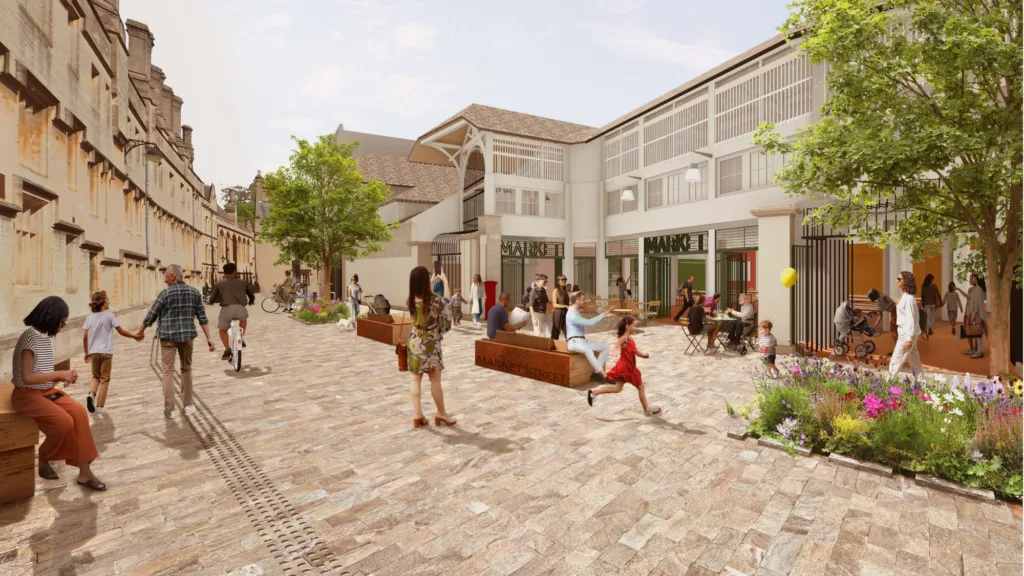
A new open courtyard and seating space
One of the most visible proposed changes is the creation of a new open court area, introducing seating and space to dwell — a shift towards a more social, flexible market environment.
Improved entrances and Market Street approach
The Market Street frontage is reimagined as a more welcoming pedestrian entrance, with improved public realm, clearer routes and enhanced lighting helping to draw people into the market.
Upgraded facilities and accessibility
Public toilets would be relocated and expanded, including increased provision for women and improved accessible facilities. Across the market, circulation, surfacing and lighting are set to be improved.
Better infrastructure behind the scenes
Much of the work is less visible but critical — including upgraded utilities, drainage systems and a new substation designed to support future energy demands.
Additional retail opportunities
The reconfiguration of space around the new courtyard could create additional retail units, depending on trader demand and final design development.
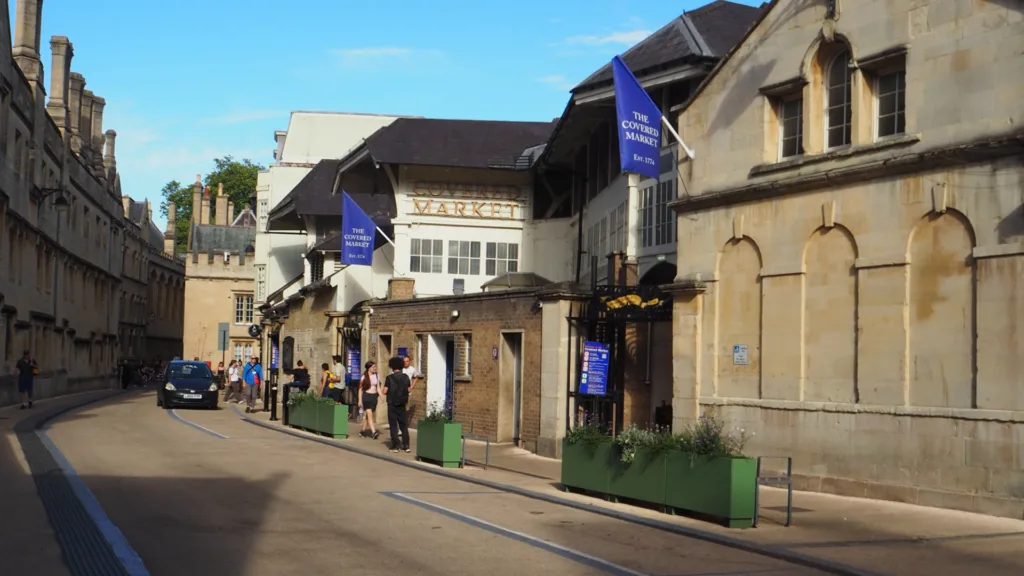
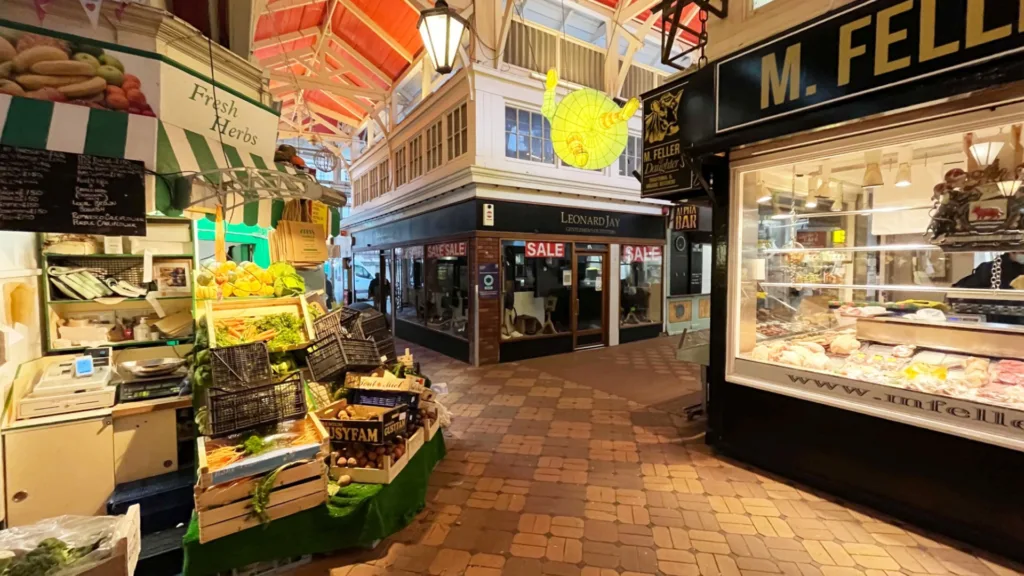
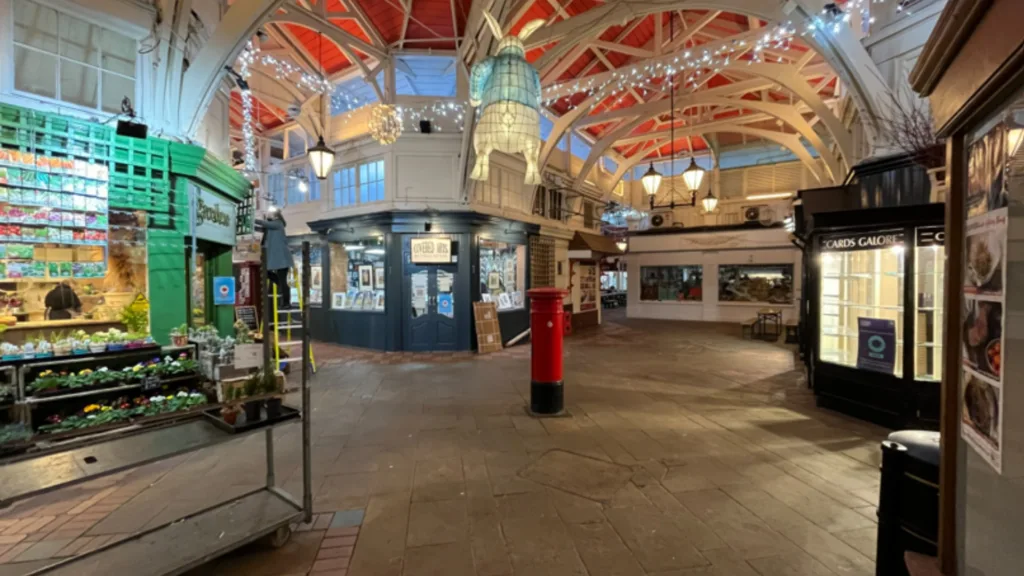
Before: a historic market under pressure
Today, the Covered Market remains busy, characterful and highly distinctive — but its infrastructure reflects its age.
Narrow corridors, constrained service spaces, and ageing utilities present ongoing operational challenges for traders and the council alike. Public facilities and accessibility, while functional, are increasingly under pressure from modern expectations.
These constraints form the backdrop to the proposed investment.
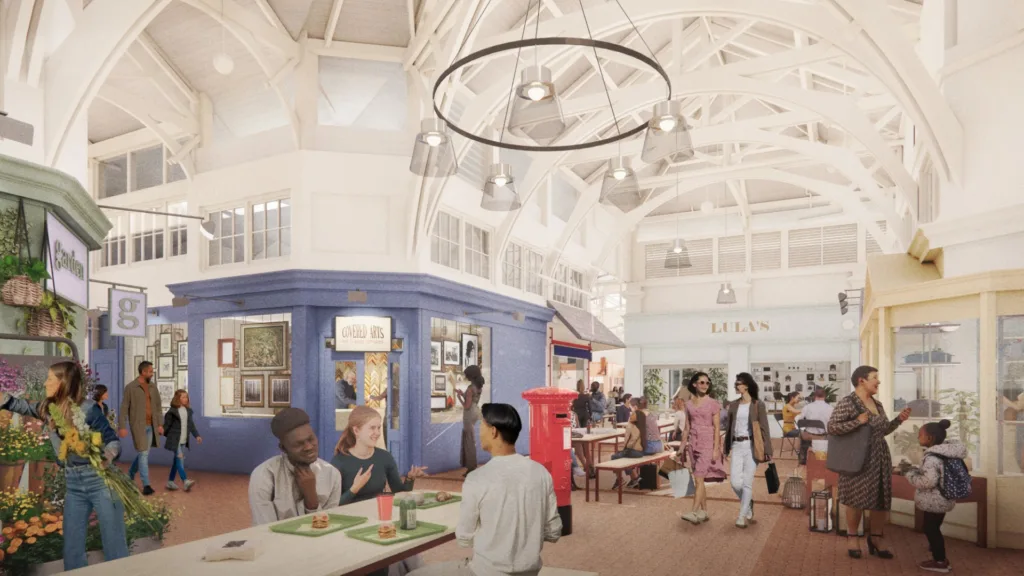
After: a more open, accessible market experience
The CGI imagery presents a different interpretation of the same space: lighter, more open, and easier to navigate, with improved sightlines and a clearer sense of arrival from the surrounding streets.
Rather than replacing the market’s identity, the proposals aim to “tidy and enhance” what already exists — creating breathing space within the historic structure while maintaining its independent trading character.
Crucially, the market remains a working space throughout the proposed works, with traders continuing to operate as improvements are phased in.
Balancing change with continuity
The council has been clear that the Covered Market will remain fundamentally the same in purpose and spirit.
Independent traders remain central to its future, and the leasing strategy continues to prioritise local businesses. The proposals are designed to support long-term resilience rather than alter the market’s identity.
At the same time, the scale of investment reflects a recognition that without intervention, key elements of the building’s infrastructure will become increasingly difficult — and costly — to maintain.
A phased transformation over time
If approved and delivered as planned, the programme would move through detailed design and engagement during 2026, with construction expected to begin from mid-2027.
The works would be delivered in phases to minimise disruption, with parts of the market remaining operational throughout.
This means the transformation would not be a single moment of change, but a gradual evolution — visible in stages rather than all at once.
In summary
The proposals for the Covered Market sit at the intersection of preservation and renewal. The challenge is not to modernise away its character, but to ensure the conditions that allow it to continue thriving — quietly evolving while remaining recognisably itself.
Whether the vision becomes reality will depend on consultation feedback, detailed design work and how the city chooses to balance heritage with future need.
Gallery
Click to enlarge
The post Oxford Covered Market: How the £8m regeneration could reshape a historic landmark appeared first on The Oxford Magazine.
from The Oxford Magazine https://ift.tt/mHpvQxO
via IFTTT
Comments
Post a Comment