Inside Homes: Kirtlington Park
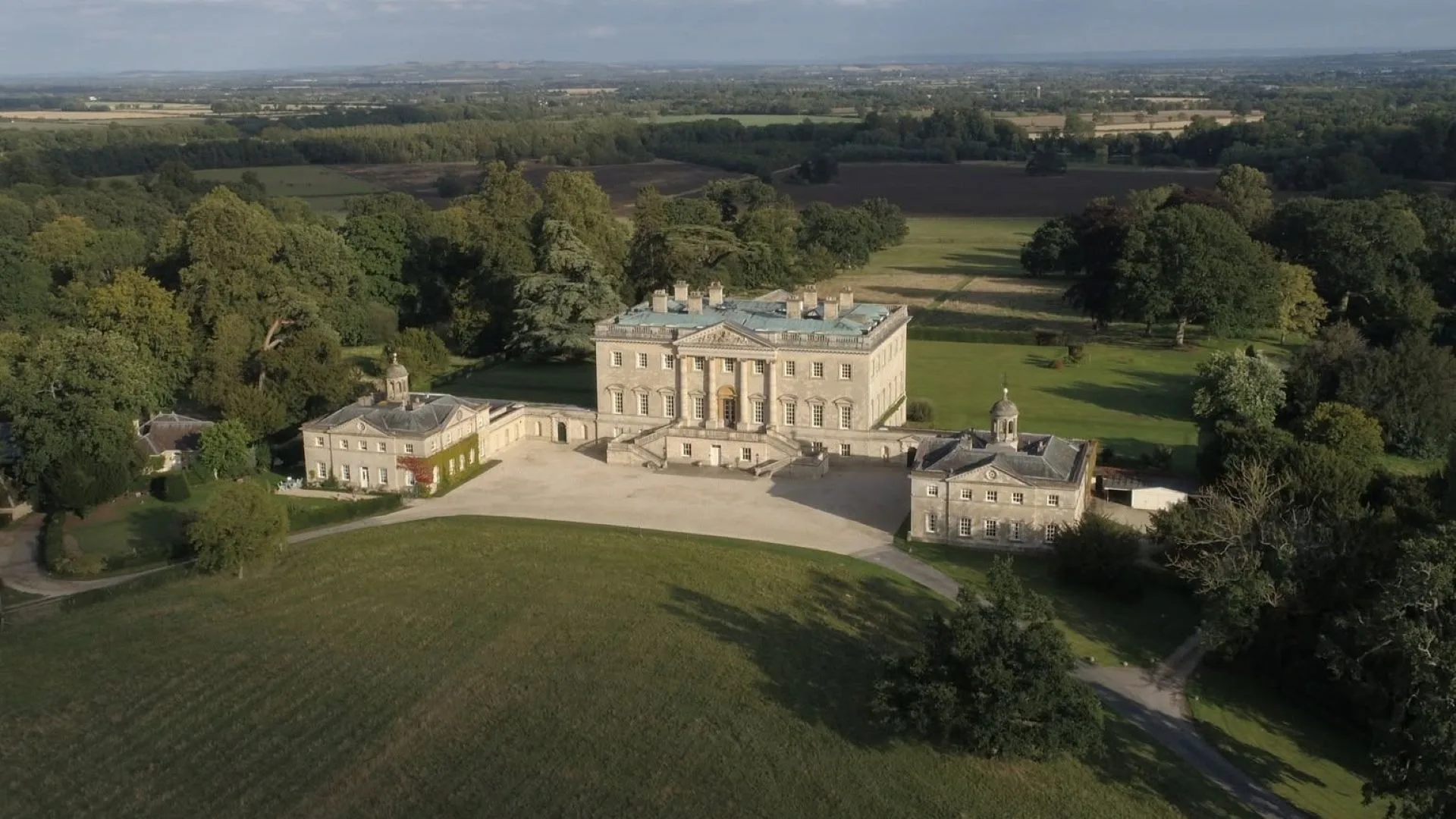
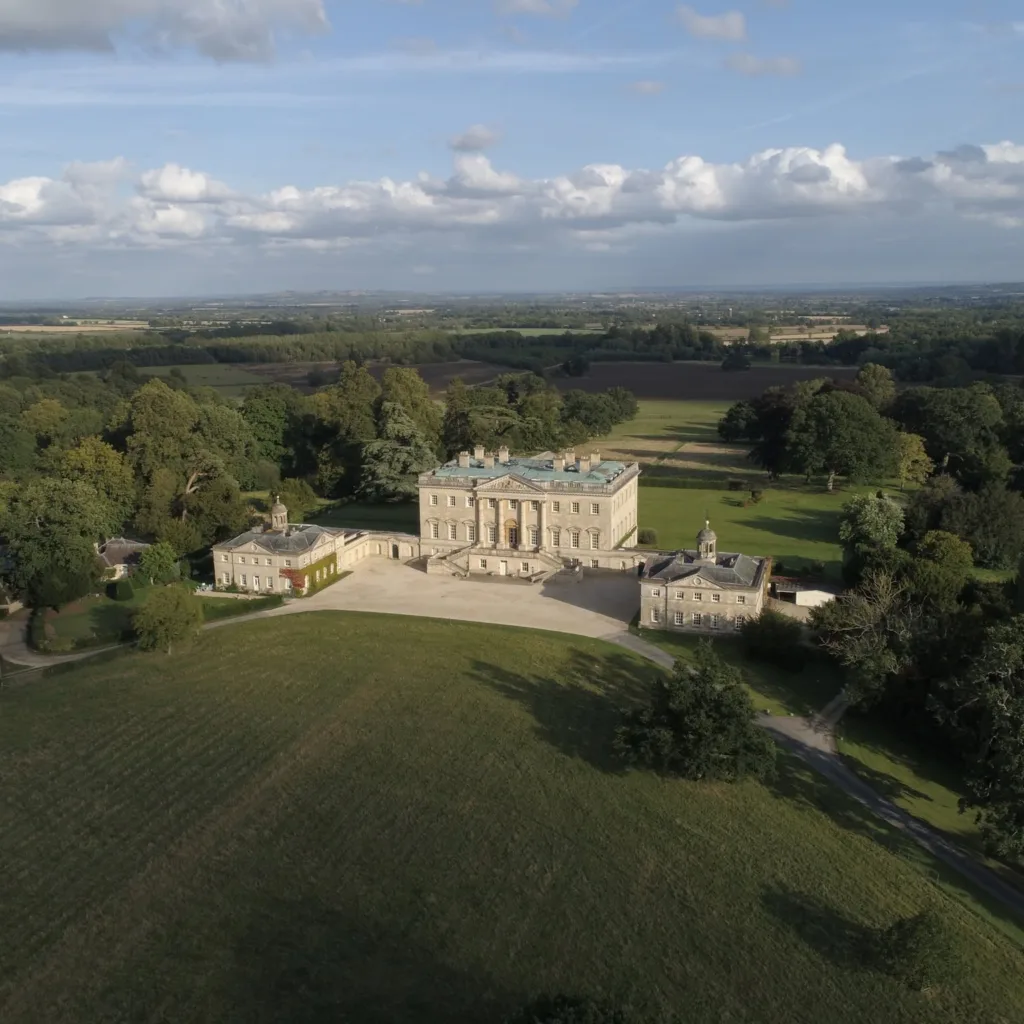
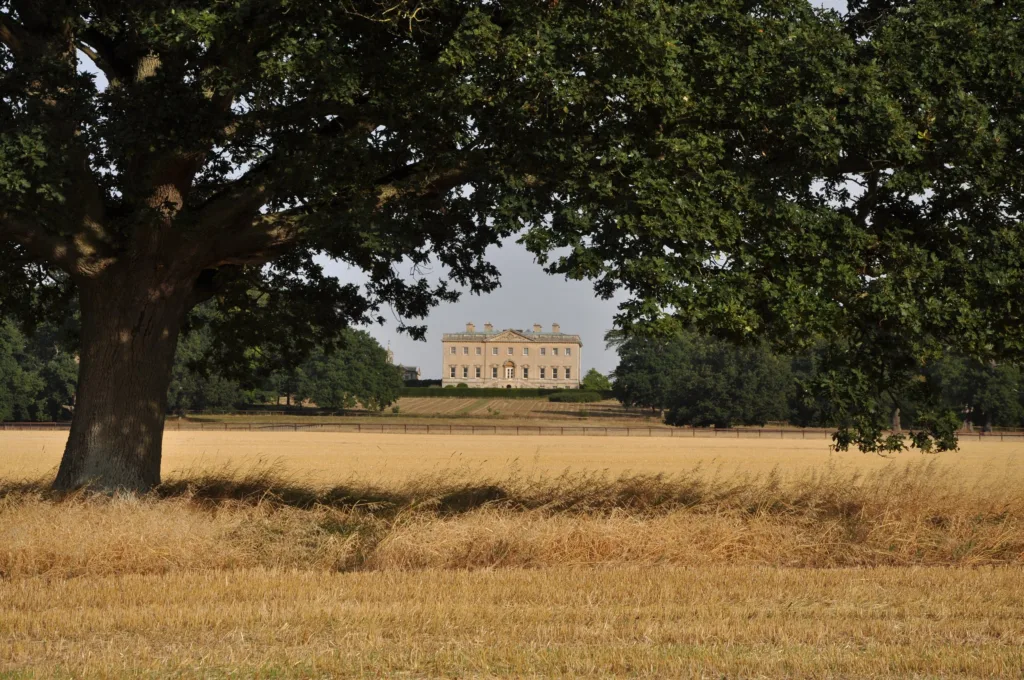
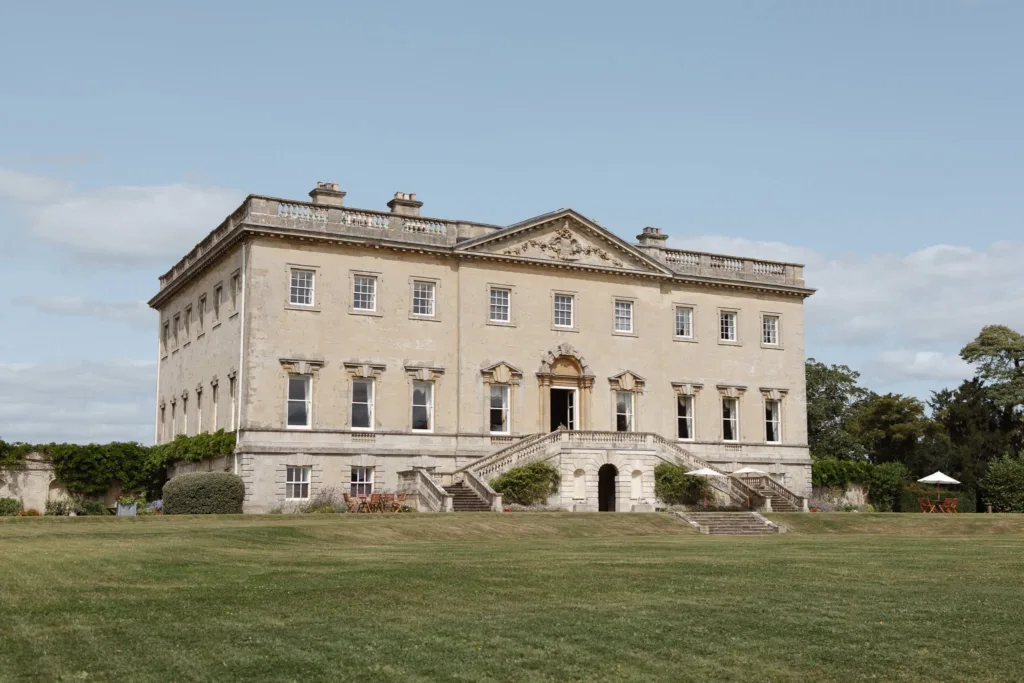
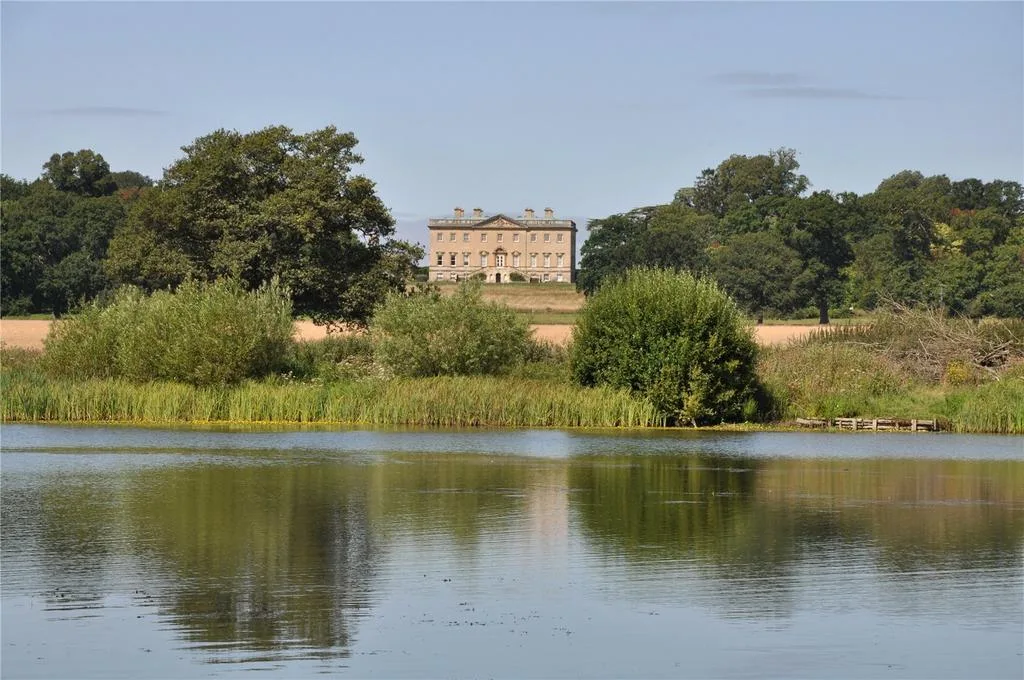
Secluded within the lyrical sweep of a Capability Brown parkland, Kirtlington Park stands as one of England’s most accomplished Palladian country houses.
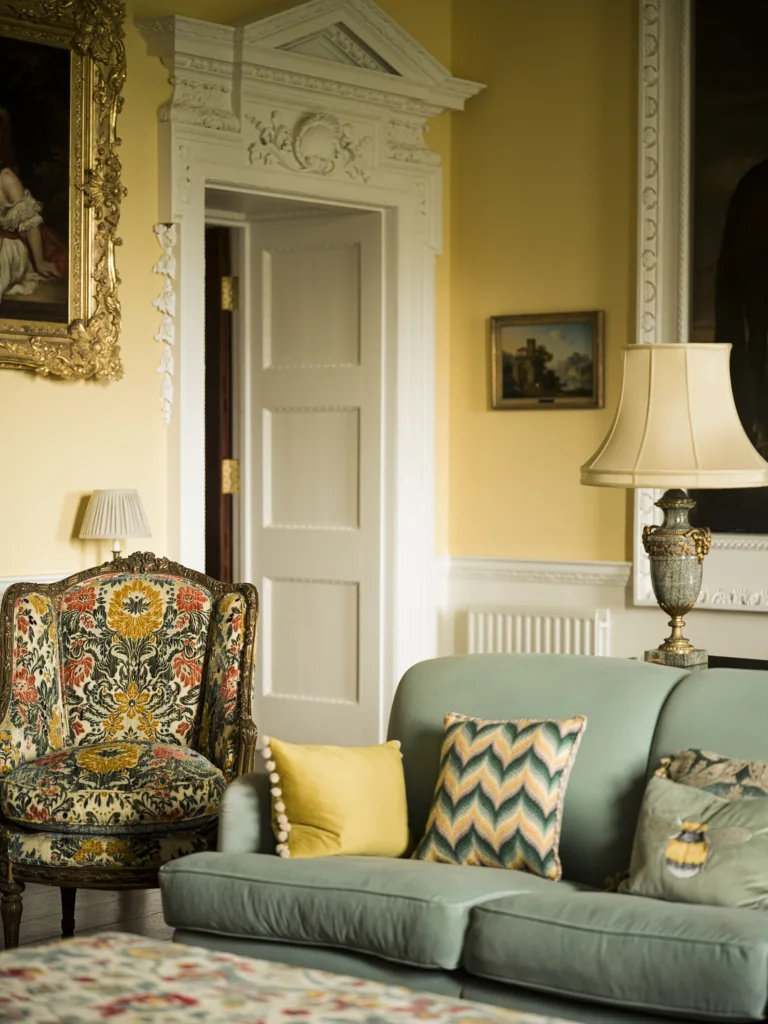
A Grade I-listed architectural treasure of national significance, it is a place where proportion, light, and landscape converge in a composition of rare refinement. Yet for all its grandeur, the house retains a deeply human scale – a home designed as much for living as for entertaining, where classical formality is softened by warmth, patina and the rhythm of family life.
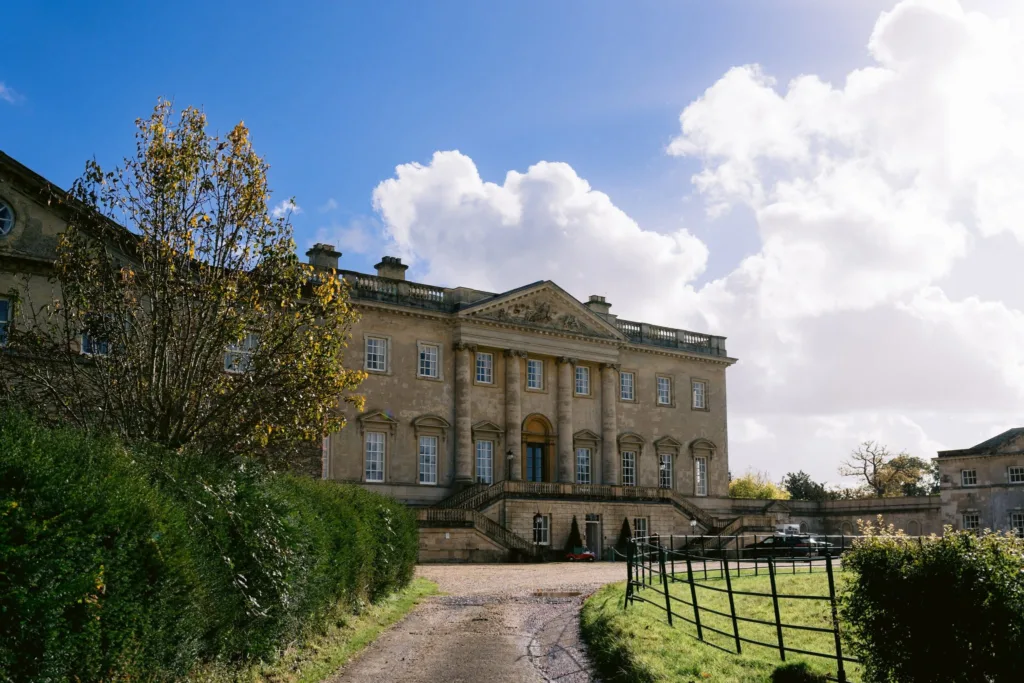
Approached via a long, unhurried drive that draws gradually away from the village edge, the house reveals itself in stages: first the rolling parkland, then the ordered geometry of its wings, and finally the central block rising on a grand piano nobile, elevated above the landscape in confident symmetry. It is a building that announces itself quietly, but unmistakably.
Designed by James Gibbs and later refined by John Sanderson, Kirtlington Park embodies the clarity and discipline of early Georgian Palladianism. Built in 1742 for Sir James Dashwood, it remains one of Oxfordshire’s most significant stately homes – a house conceived not merely as a residence, but as a stage for sociability, ceremony and cultivated ease.
A House Built for Entertaining
From the outset, Kirtlington Park was designed for gathering. That intention still defines its character today. The principal reception rooms are arranged in a sequence that encourages movement and encounter, each space flowing naturally into the next.
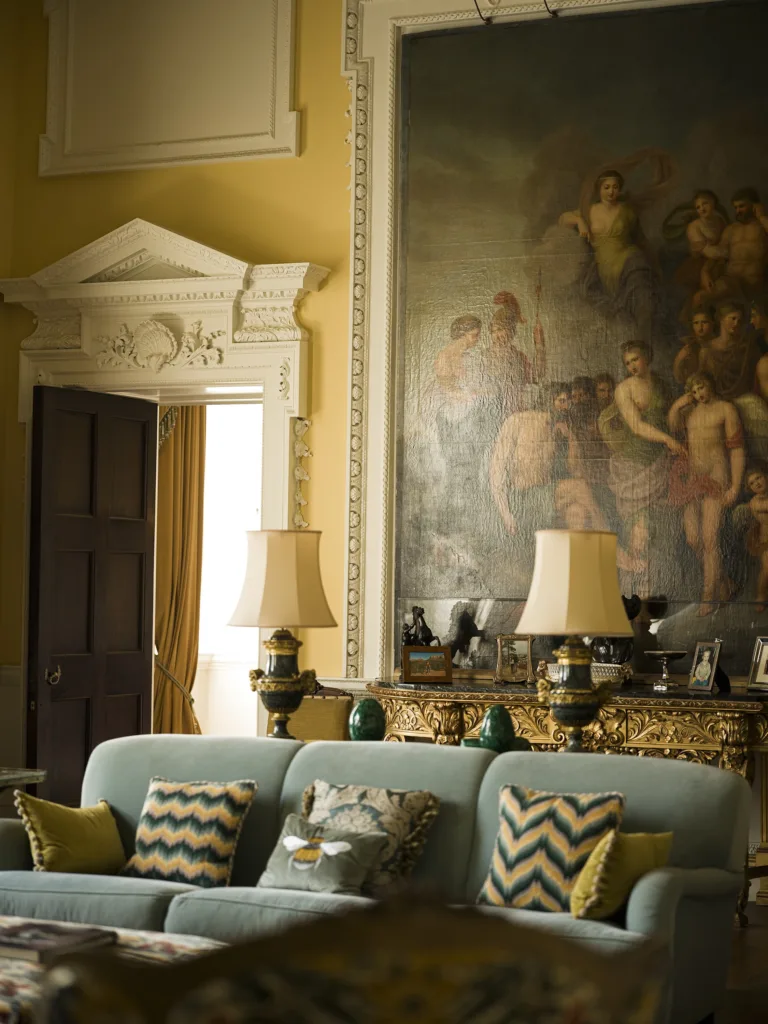
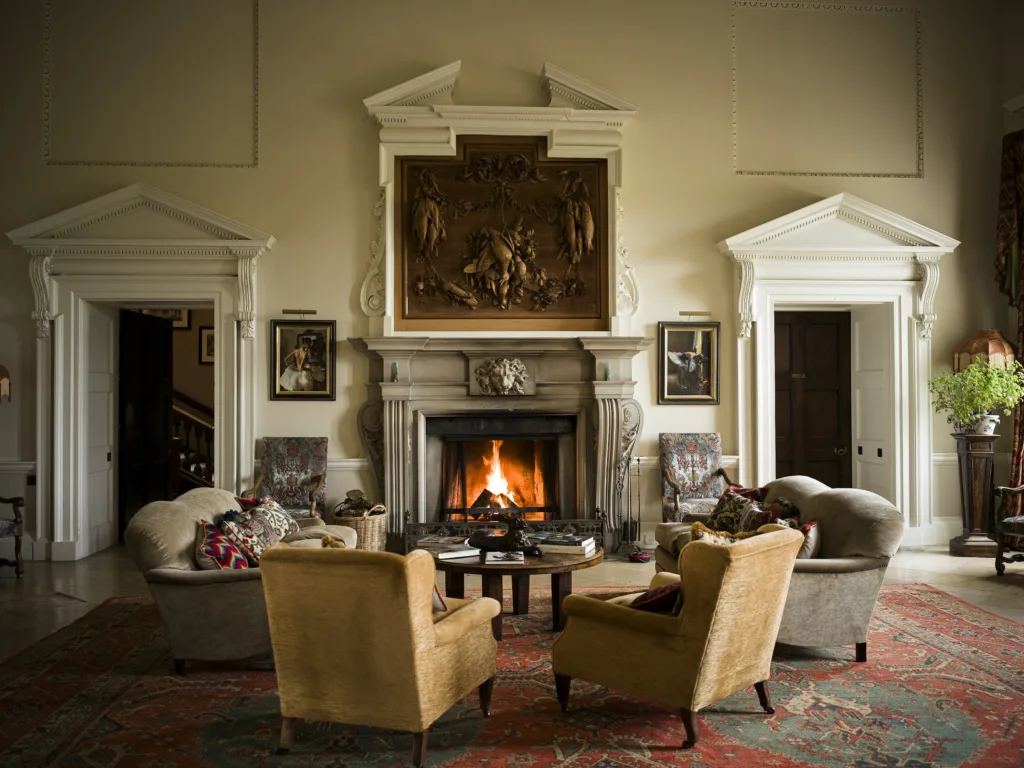
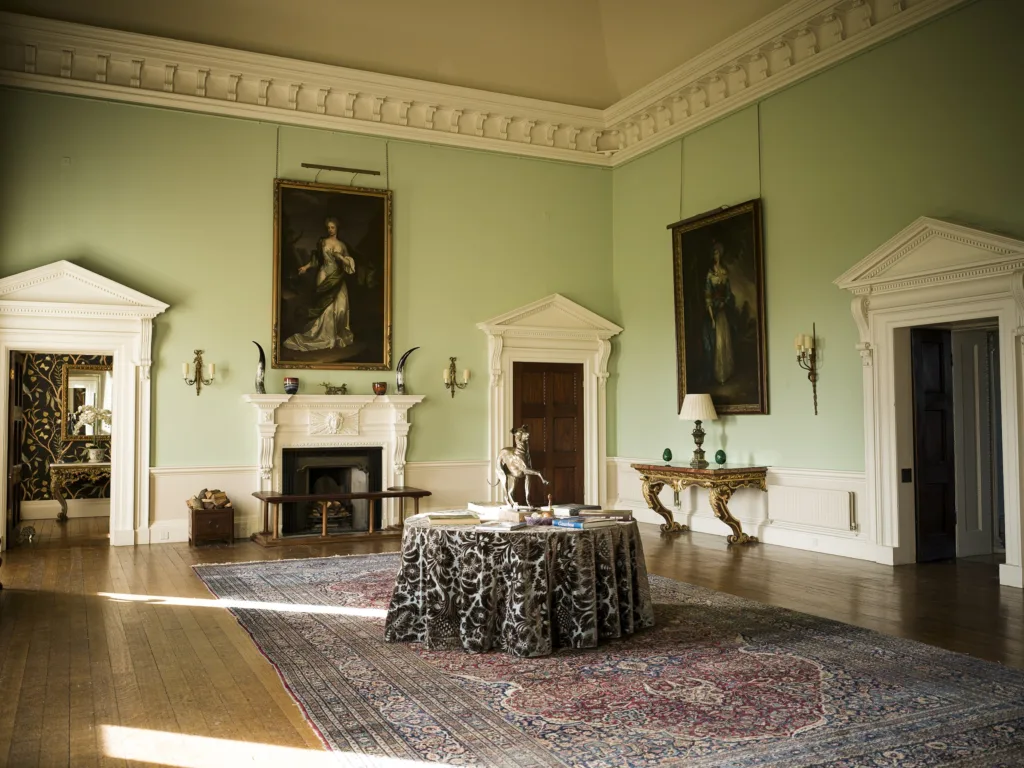
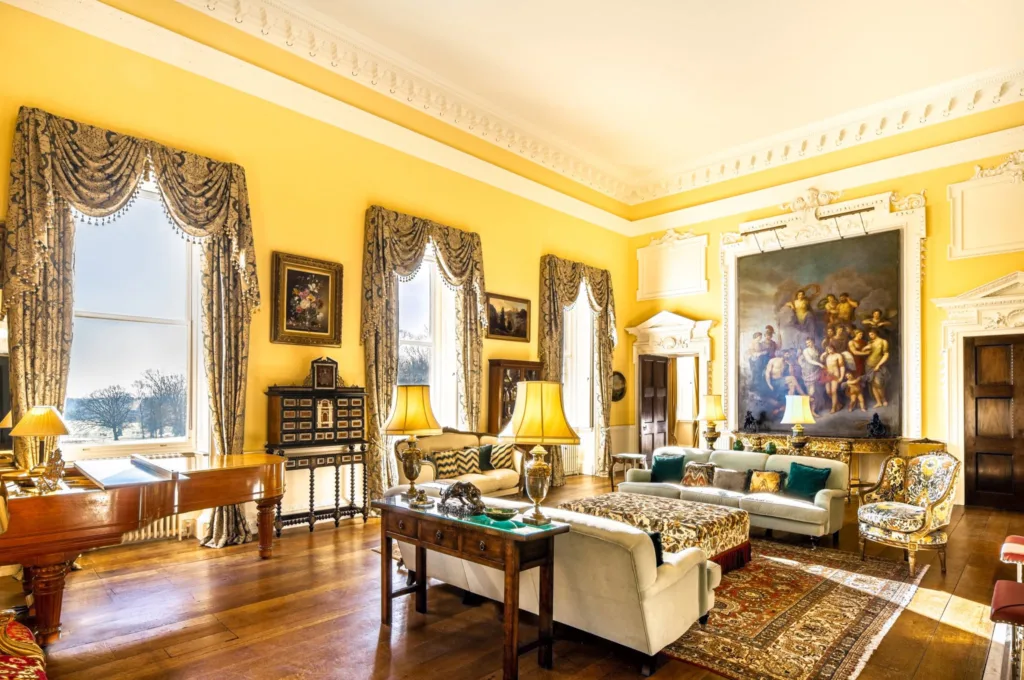
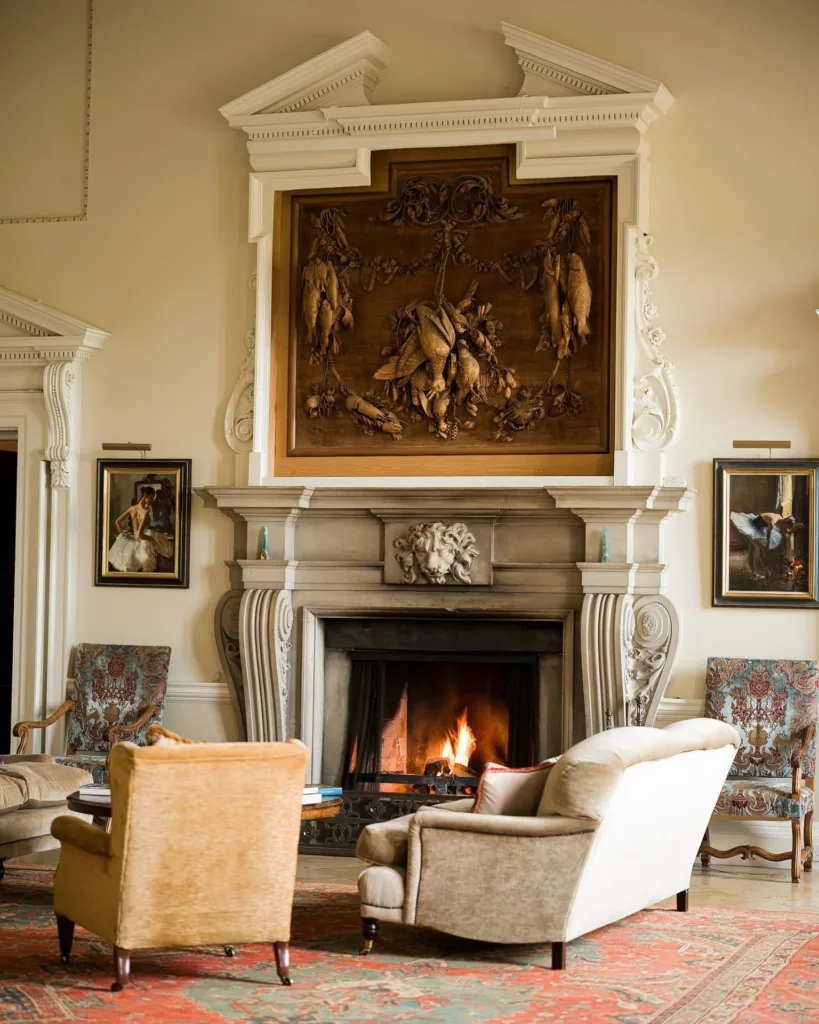
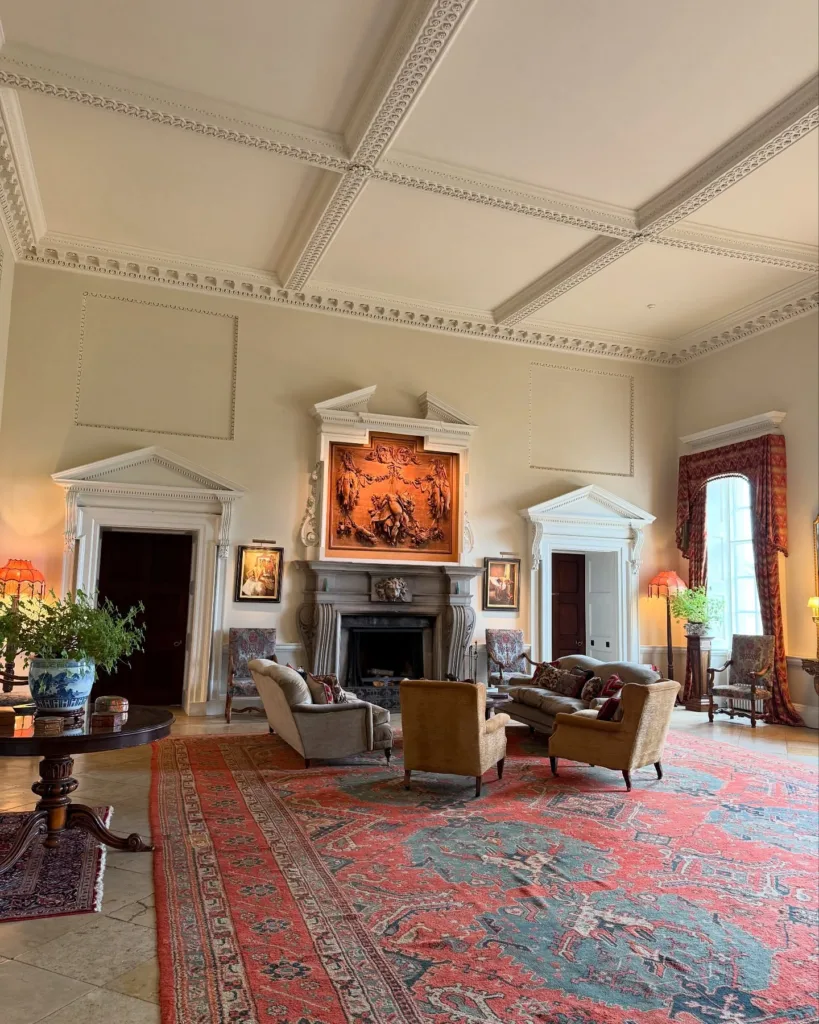
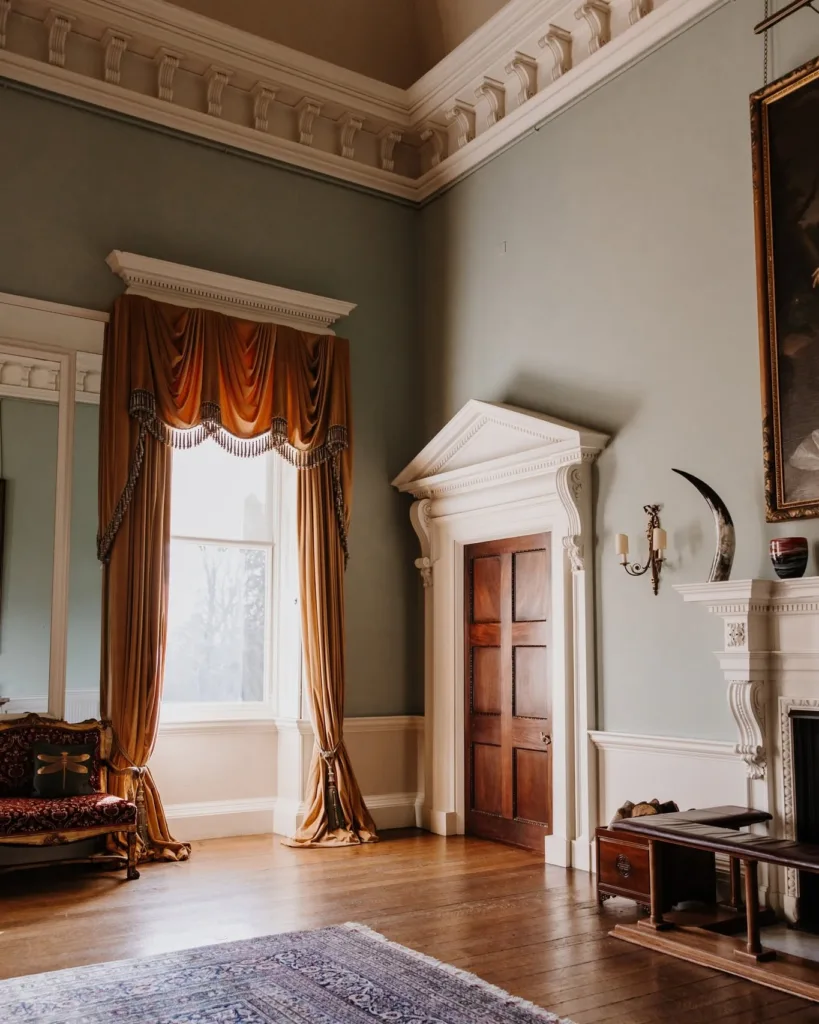
At the heart of the house lies the magnificent Saloon – a soaring 36-foot space that anchors the entire composition. It is here that the architecture reveals its full confidence: tall sash windows drawing in the shifting parkland light, classical detailing carried with restraint, and a sense of volume that feels both theatrical and balanced. It is a room that can hold hundreds, yet never loses its sense of proportion.
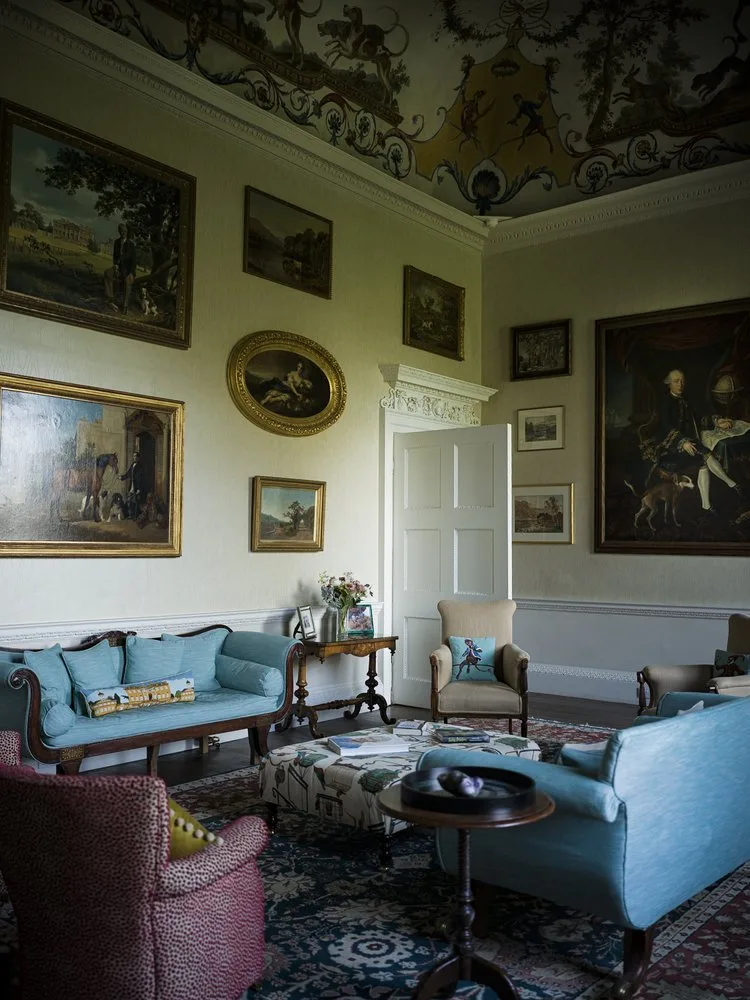
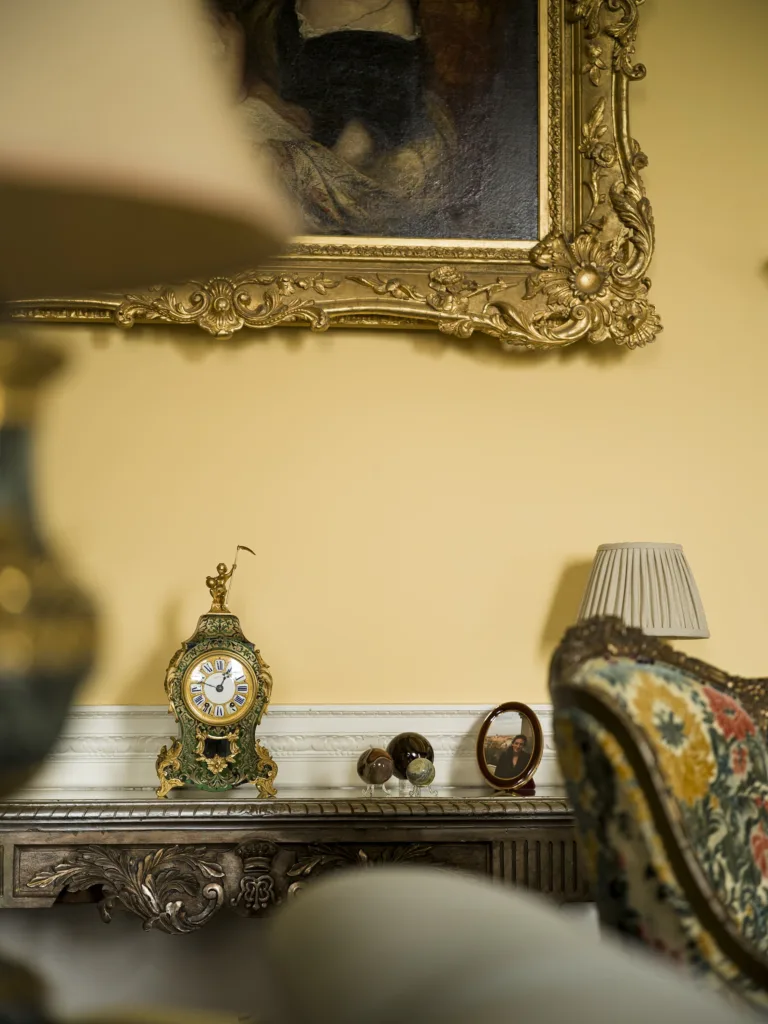
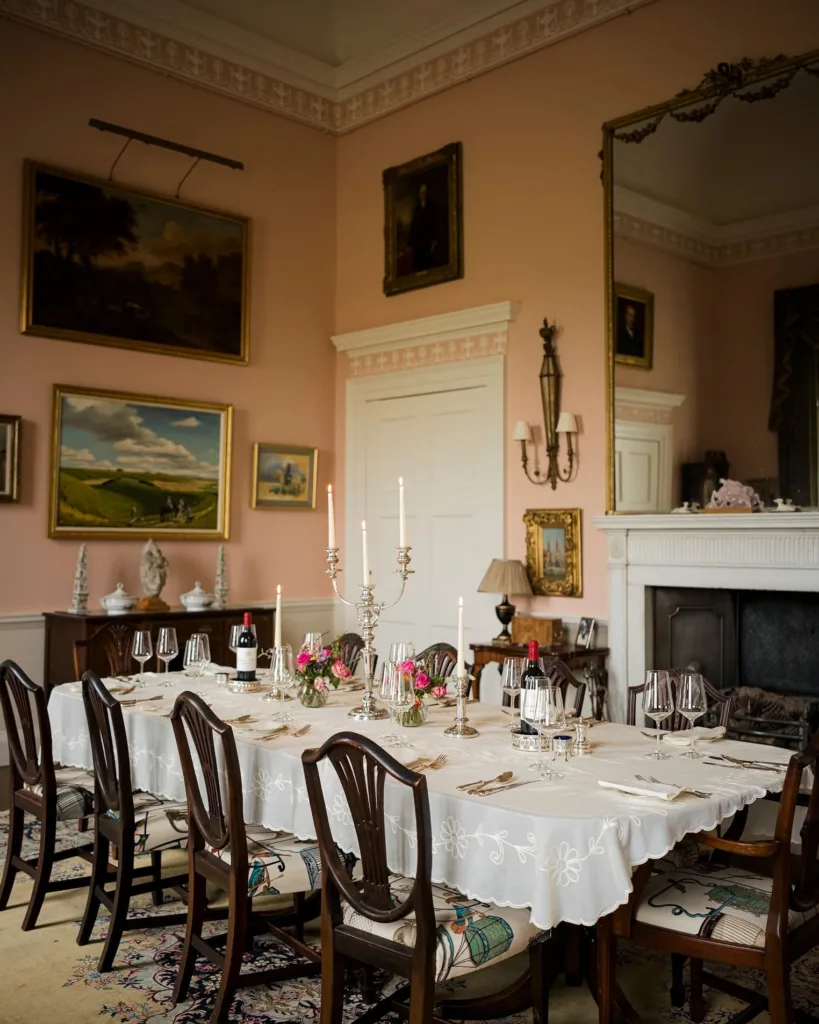
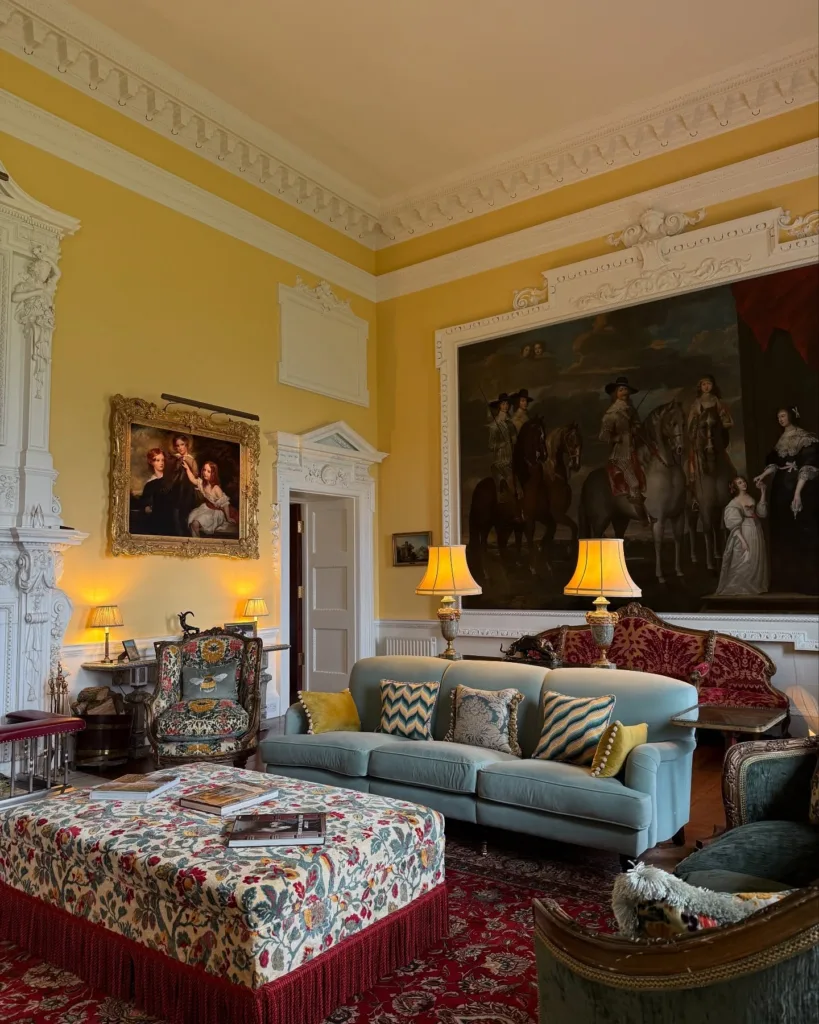
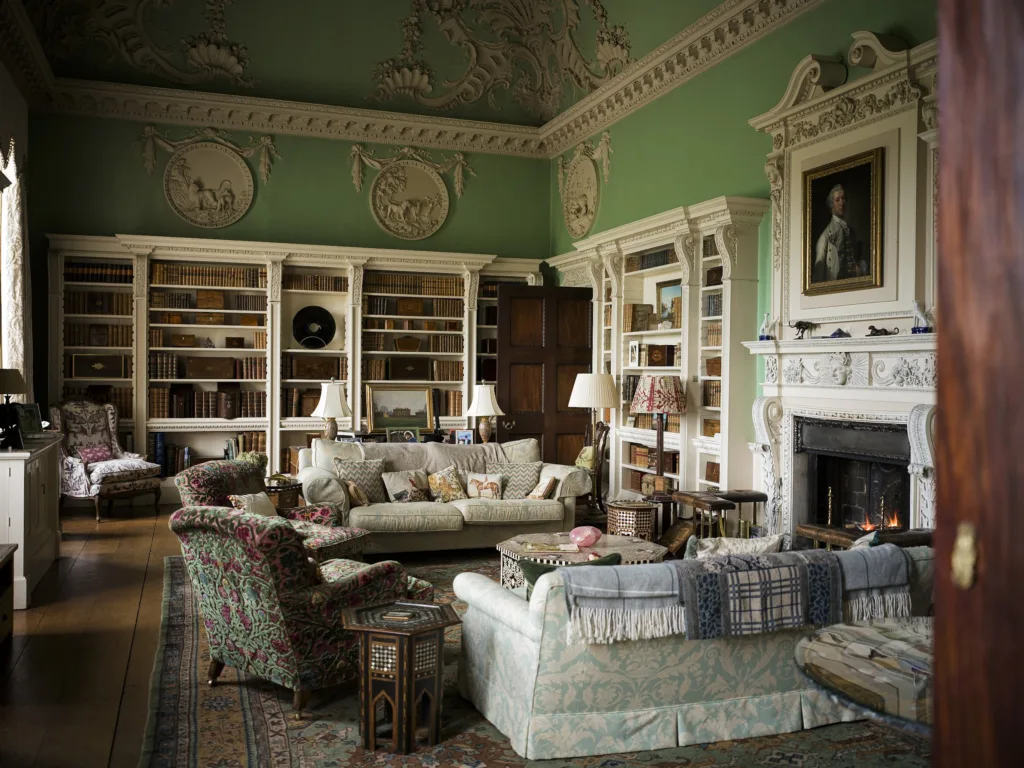
From the Saloon, a series of equally distinguished rooms unfold: the Drawing Room, Library, Dining Room, Morning Room and the celebrated Monkey Room. Each carries its own identity while remaining part of a unified architectural language. The effect is less of compartmentalised spaces and more of a continuous conversation between rooms.
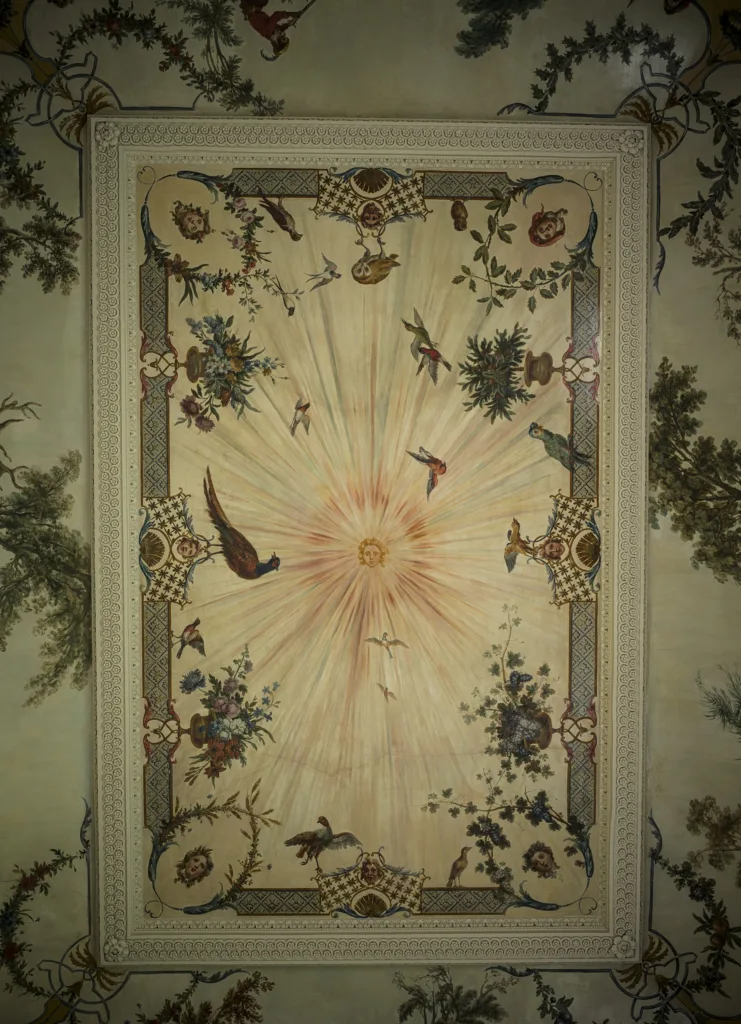
The Monkey Room, with its remarkable ceiling painted in 1760 by the French artist Andien de Clermont, is one of the house’s most distinctive interiors. Its playful singerie scenes – monkeys engaged in human pastimes – bring a note of wit and theatricality into an otherwise formal sequence of state rooms. It is a reminder that Georgian grandeur was never without humour.
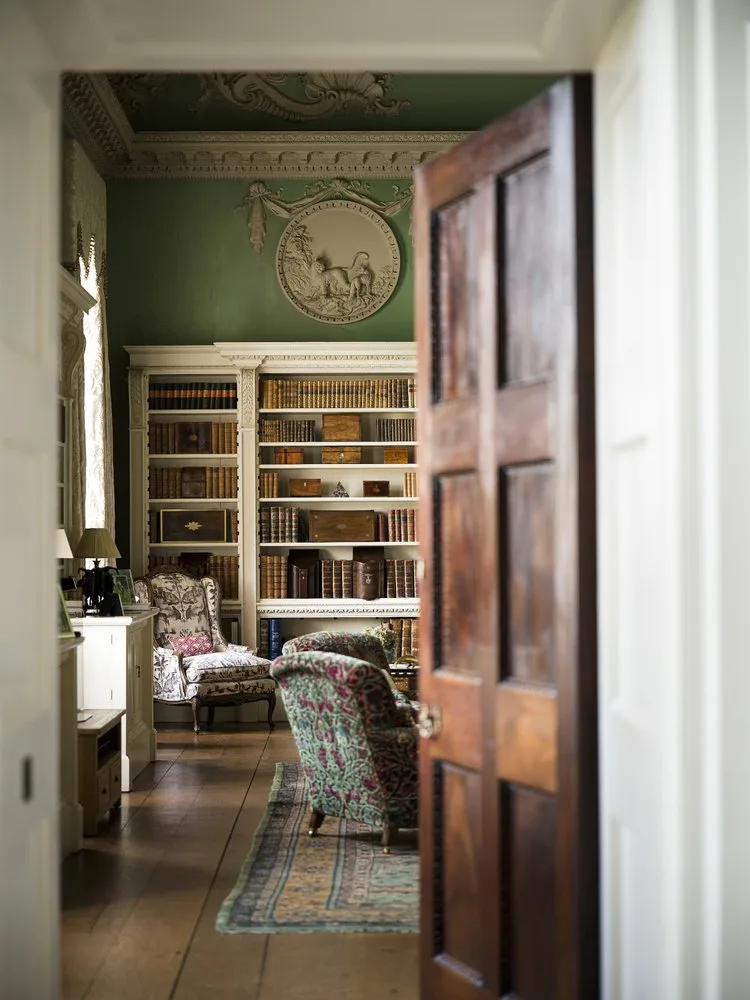
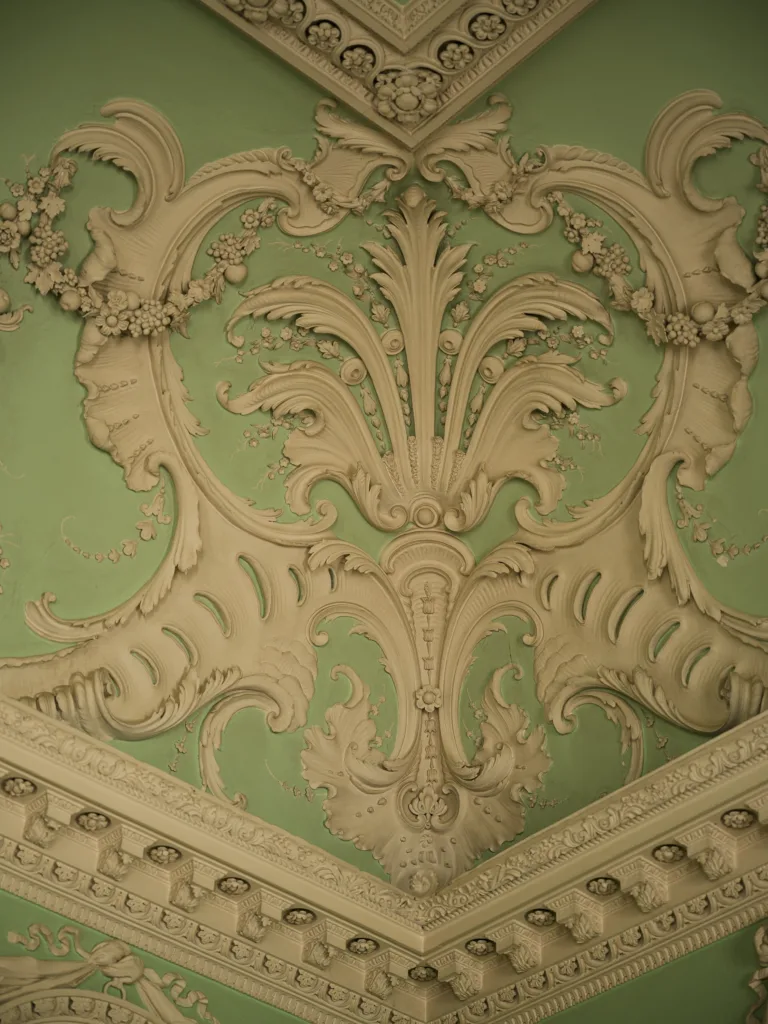
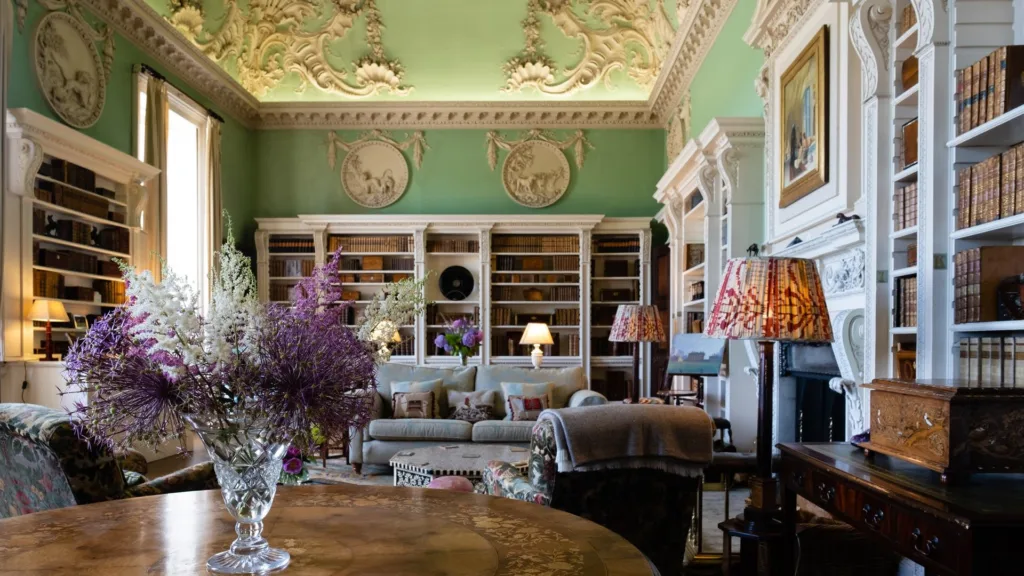
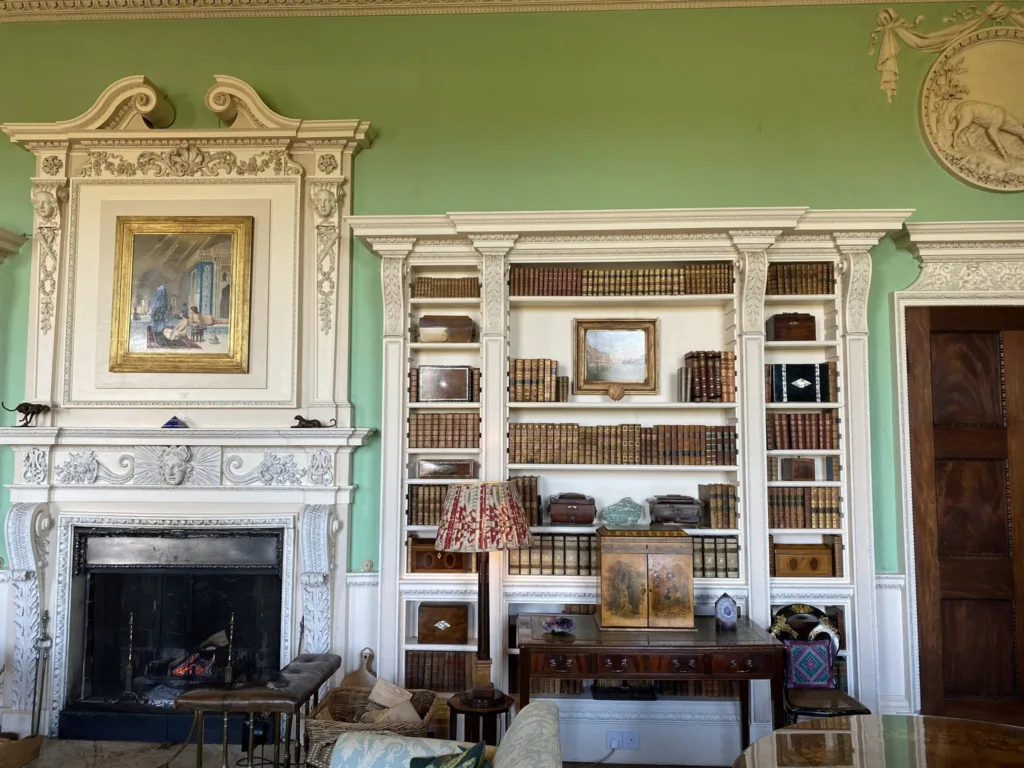
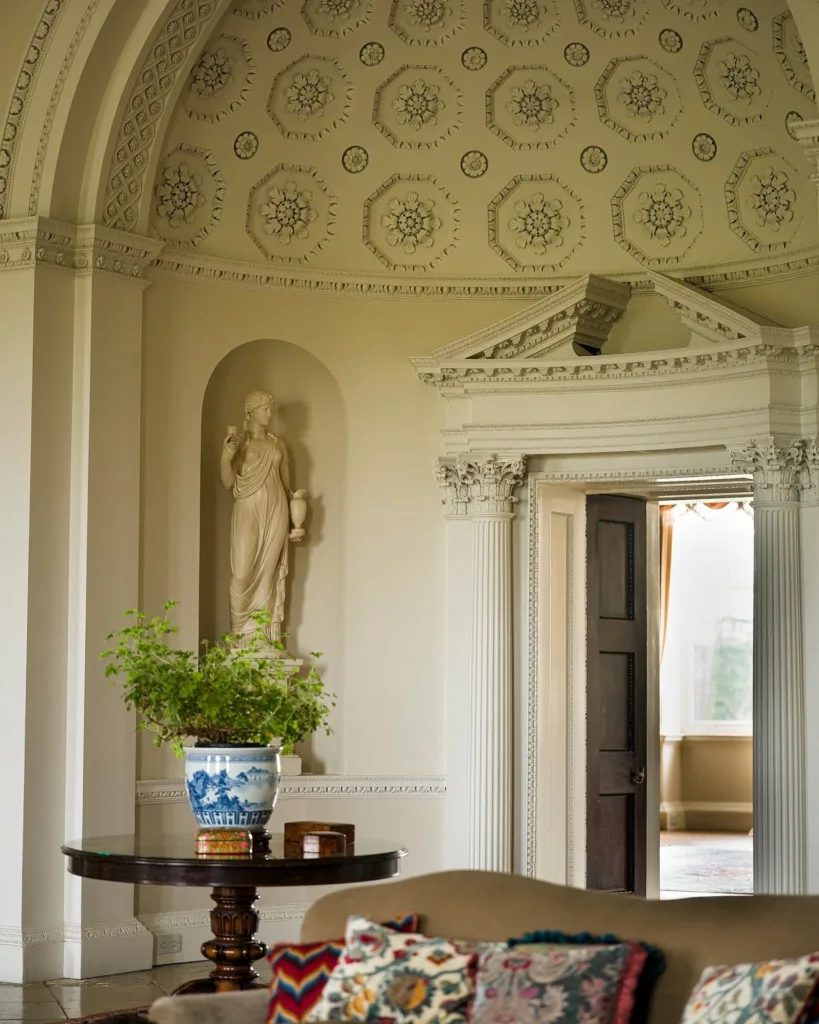
The Library offers a different kind of spectacle. Its Rococo plasterwork ceiling is a profusion of fruit, flowers and foliage, rendered with such delicacy that it feels almost weightless. It is a room designed for retreat rather than display – a quiet counterpoint to the more public spaces beyond.
Architecture, Craft and Continuity
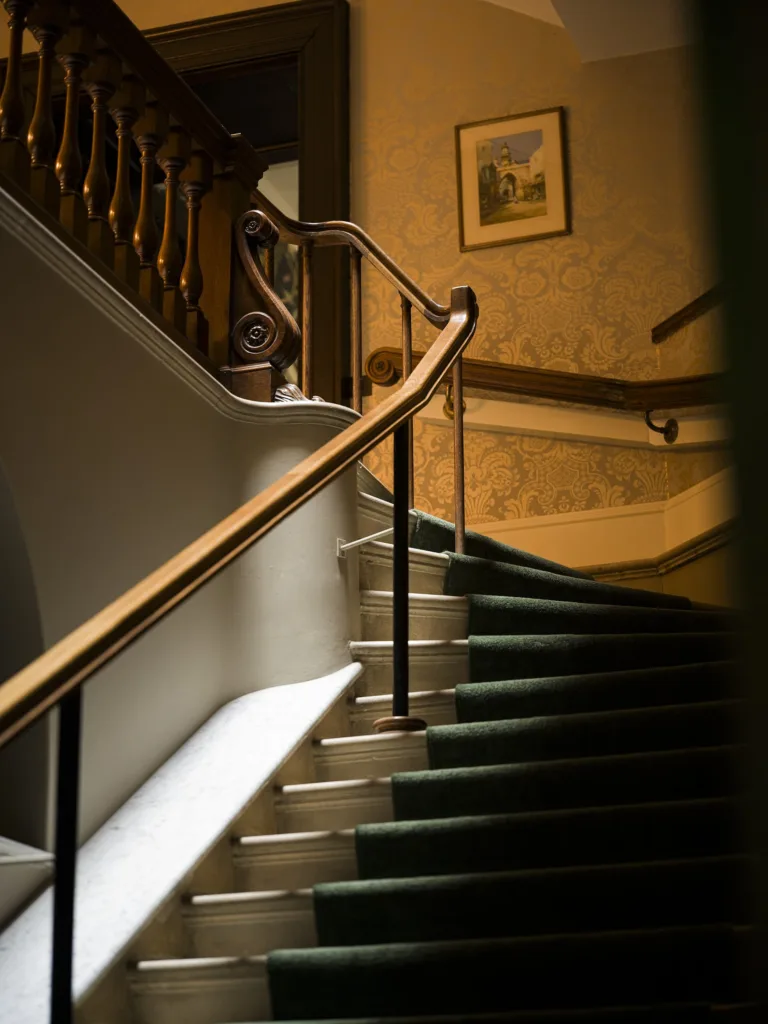
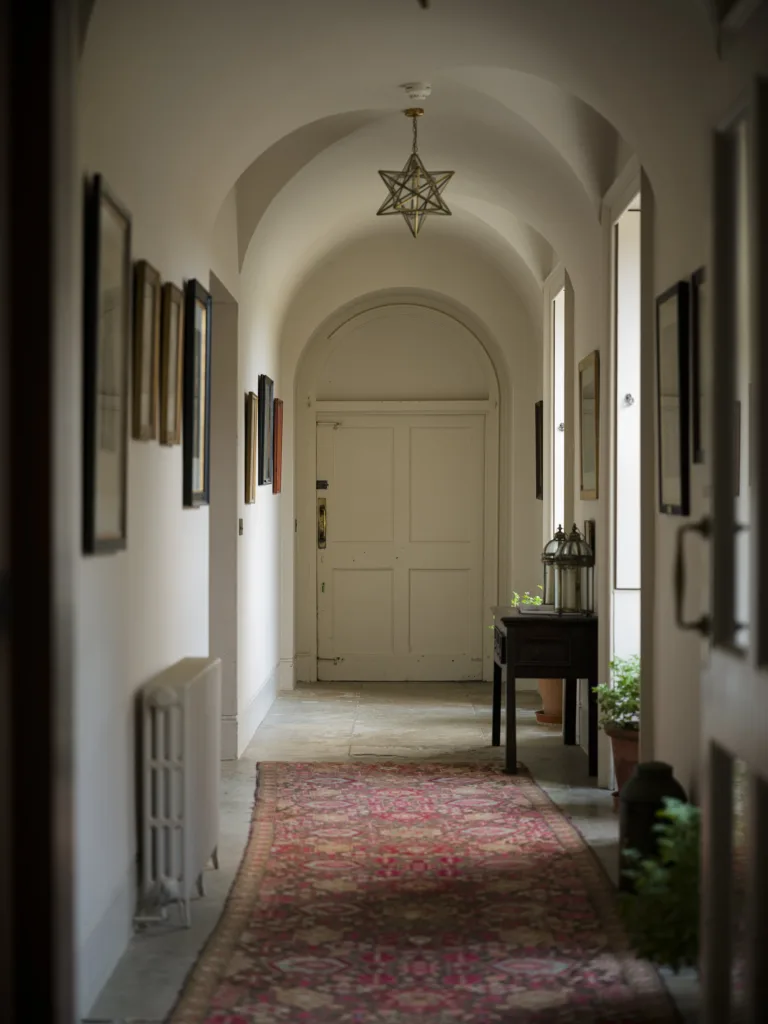
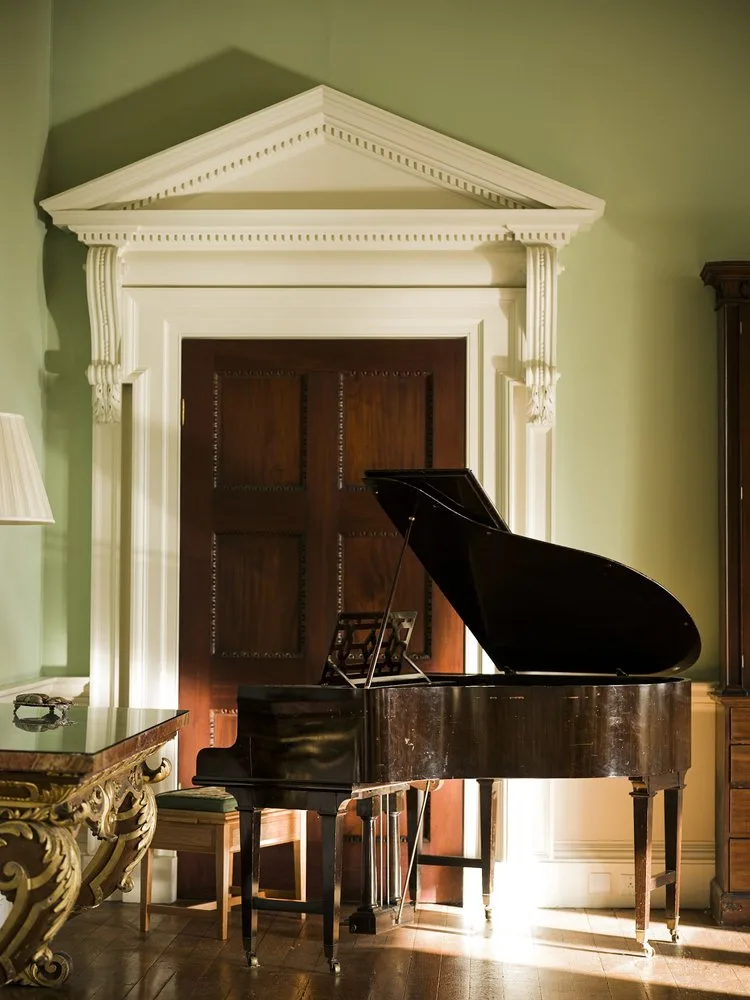
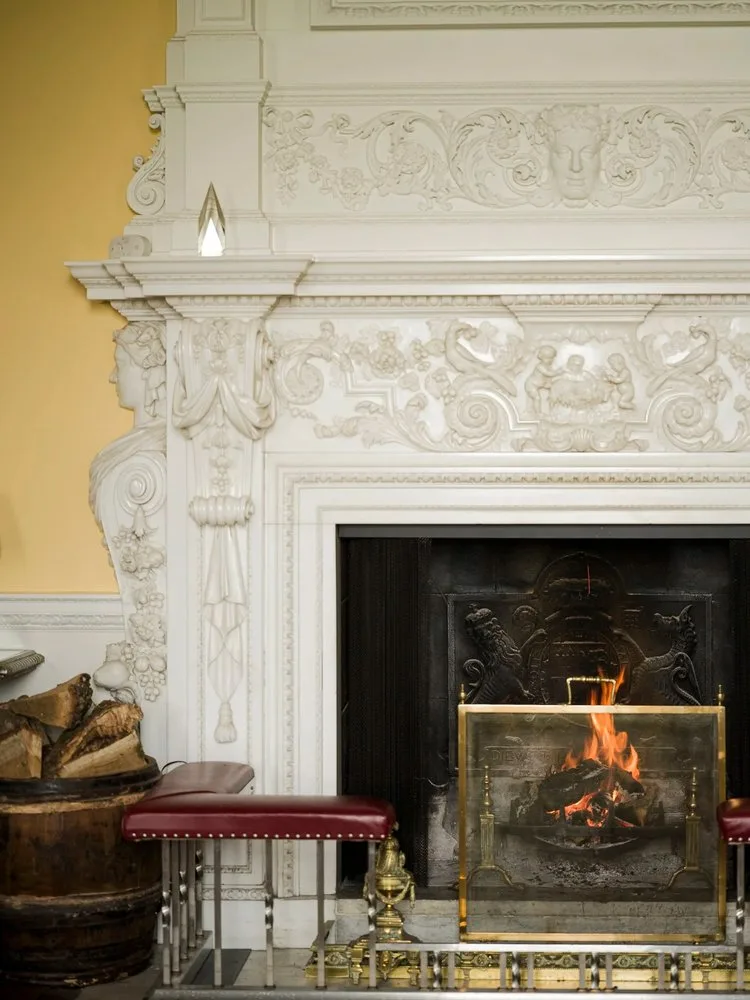
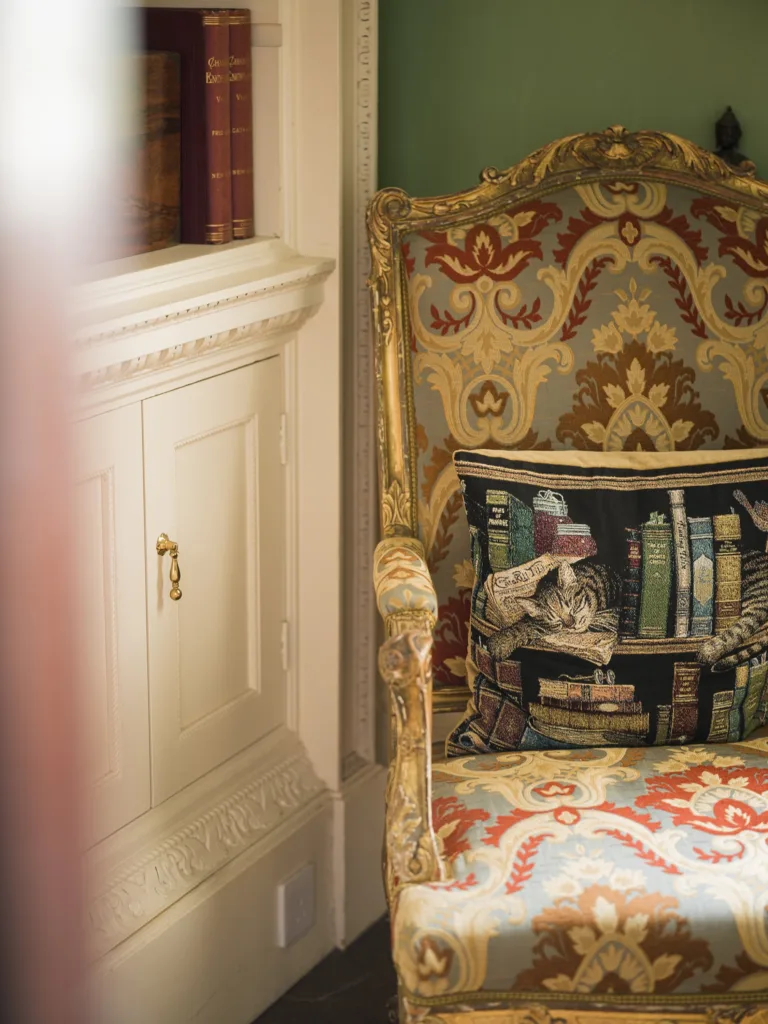
The craftsmanship throughout Kirtlington Park is exceptional. Fine plasterwork, carved chimney pieces and tall, elegant proportions define each principal room. Two grand oak staircases and two stone spiral staircases connect the house vertically, creating a sense of architectural journey as one moves between floors.
Recent restoration works have ensured that the house’s historic fabric is preserved with care and intelligence. Roof structures, stonework, windows and interiors have all been carefully renewed, alongside modern interventions in plumbing, electrics and WiFi infrastructure. New kitchens and bathrooms sit comfortably within the historic envelope – discreetly integrated, never intrusive.
This balance between preservation and adaptation is central to the house’s continued life. Kirtlington Park does not feel frozen in time; rather, it feels maintained in active use, evolving without losing its identity.
Life Below Stairs and Beyond the State Rooms
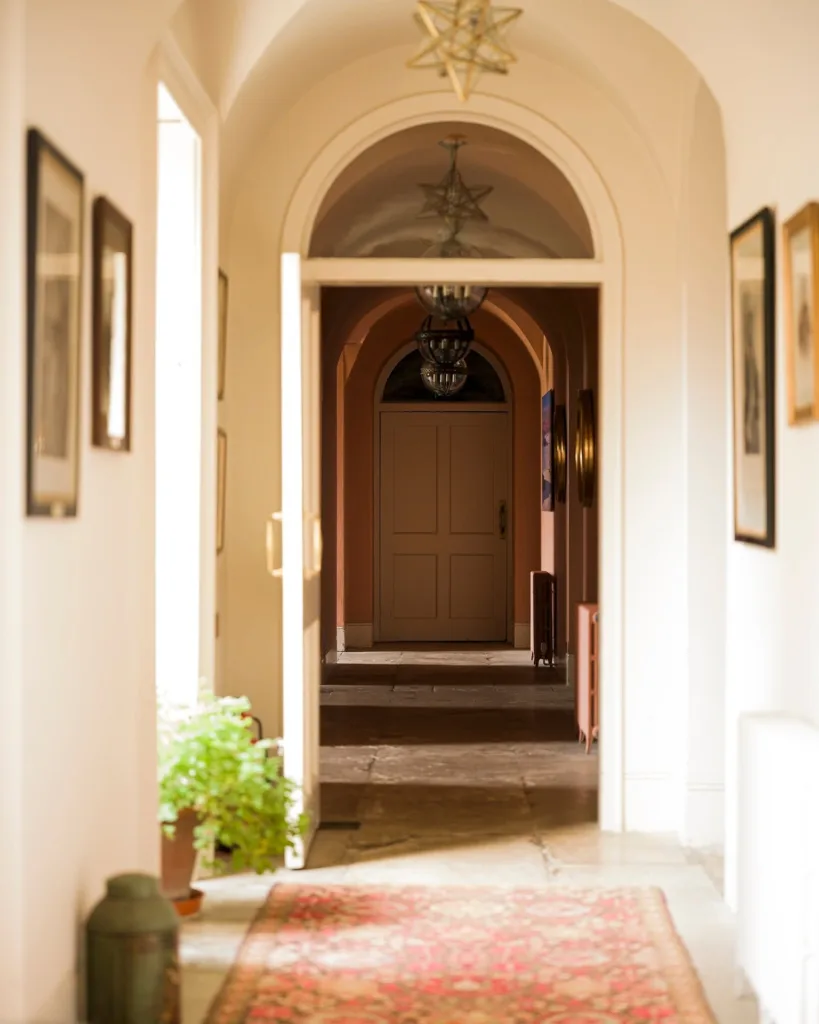
While the principal floor delivers grandeur in abundance, the lower levels reveal the practical intelligence of the house’s design. The ground floor accommodates a series of secondary and leisure spaces that support modern living on a substantial scale.
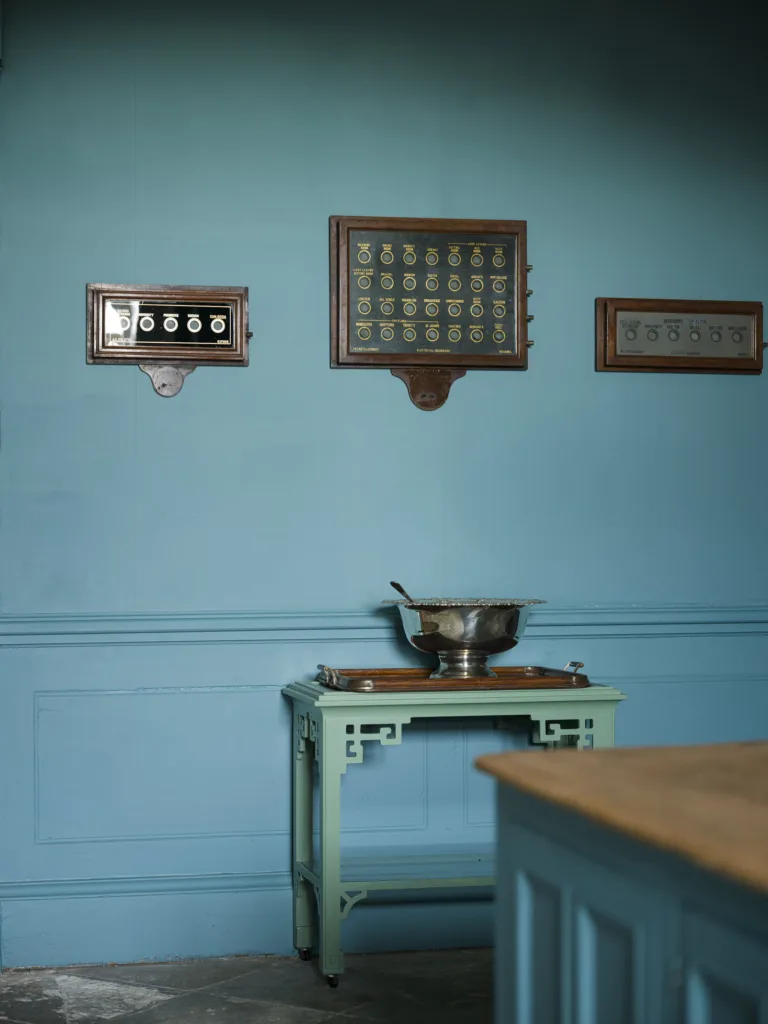
There is a billiards room, gym, wine cellars, butler’s pantry, catering kitchen and extensive storage areas, alongside plant rooms and service corridors that quietly sustain the operation of the house. The former Servants’ Hall has been reimagined as a relaxed cinema and games room, complete with OLED screen and integrated sound system – a contemporary reinterpretation of communal space that feels entirely at ease within the building’s fabric.
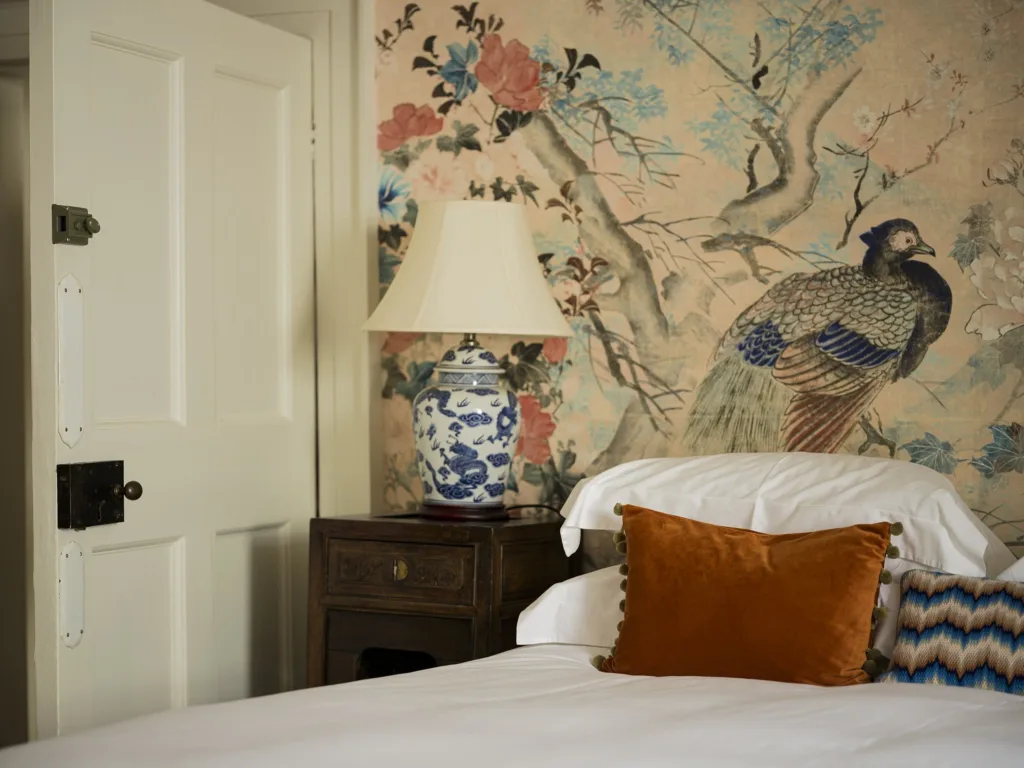
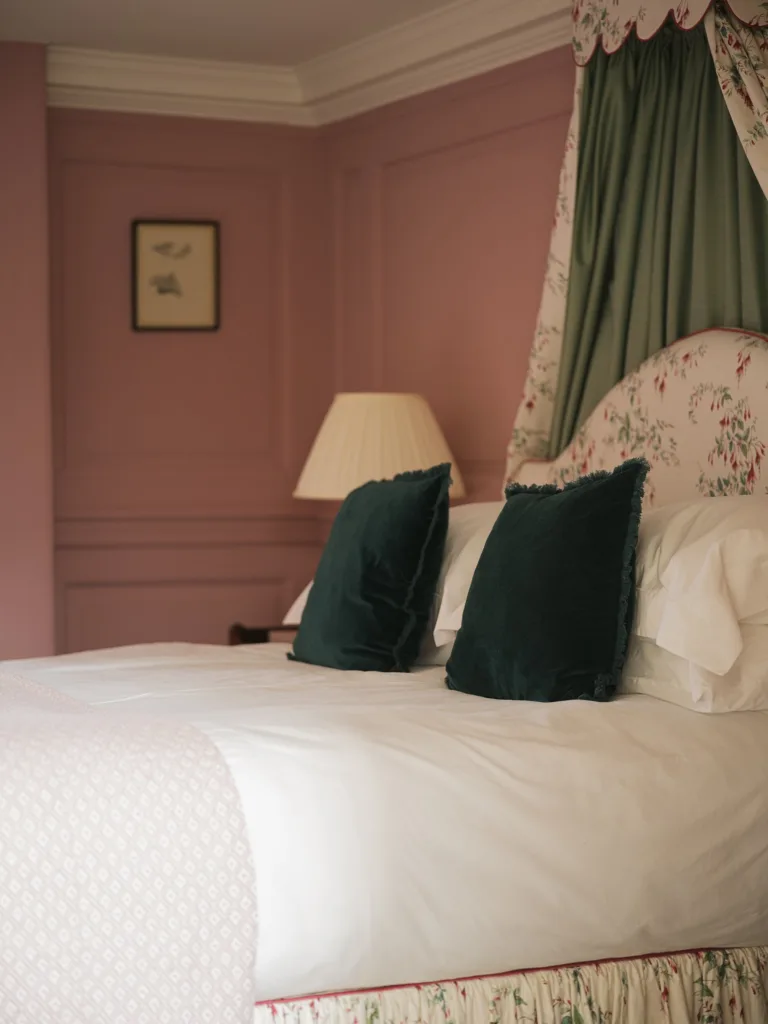
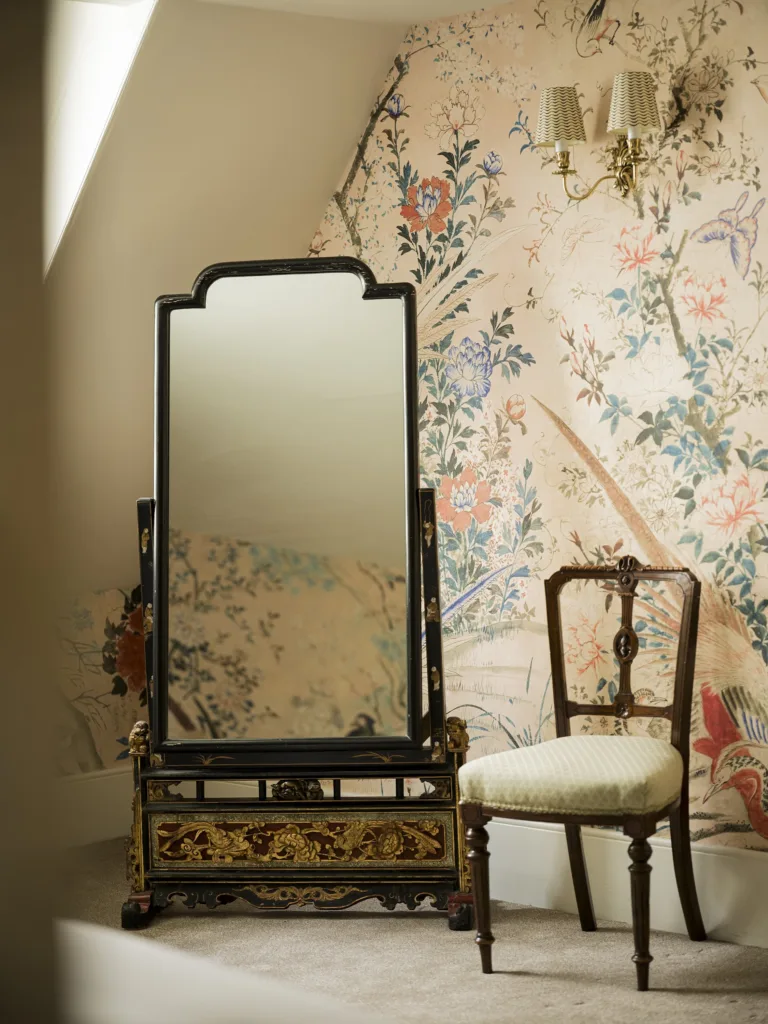
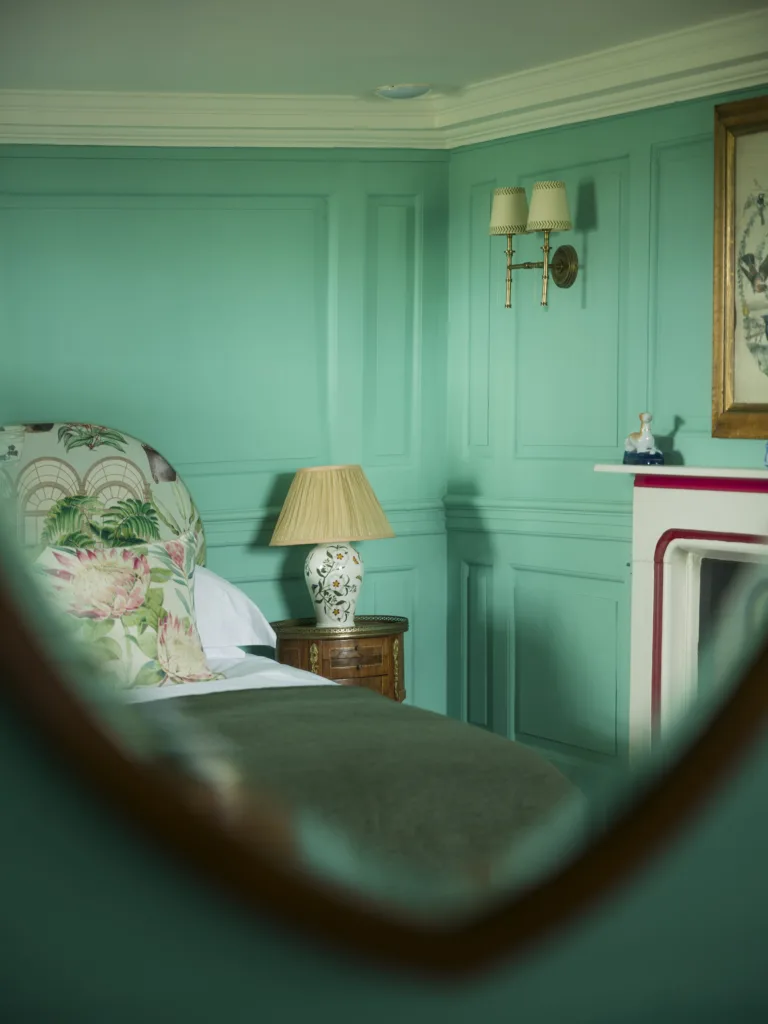
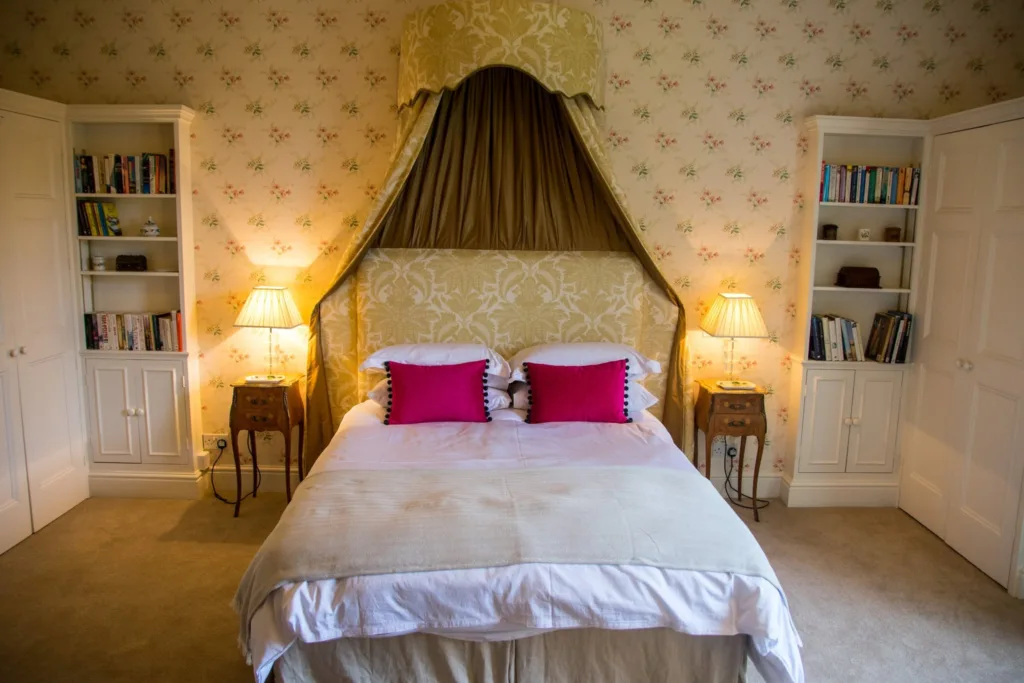
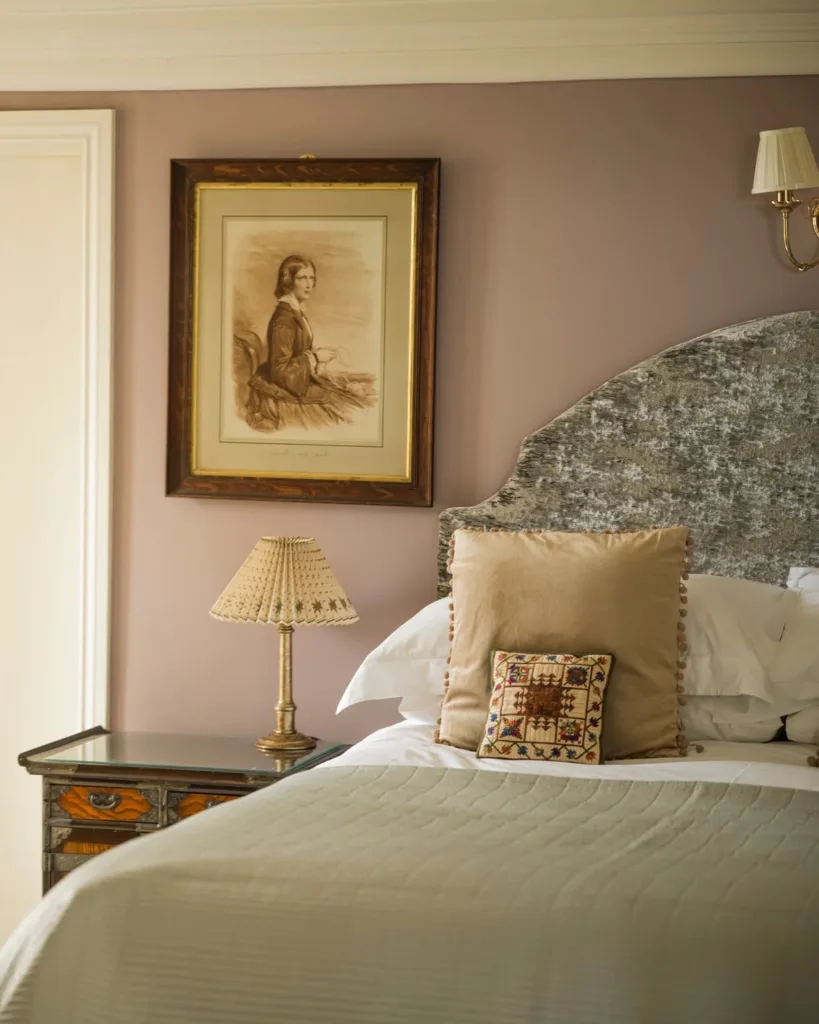
Above, the upper floors are arranged as a series of generous bedroom suites, dressing rooms and guest accommodation. These are spaces defined less by ostentation than by comfort and proportion, continuing the house’s underlying philosophy: that grandeur and livability are not opposing forces, but complementary ones.
Secondary Buildings and Estate Living
Beyond the main house, Kirtlington Park extends into a carefully composed collection of ancillary buildings that deepen its sense of estate living.
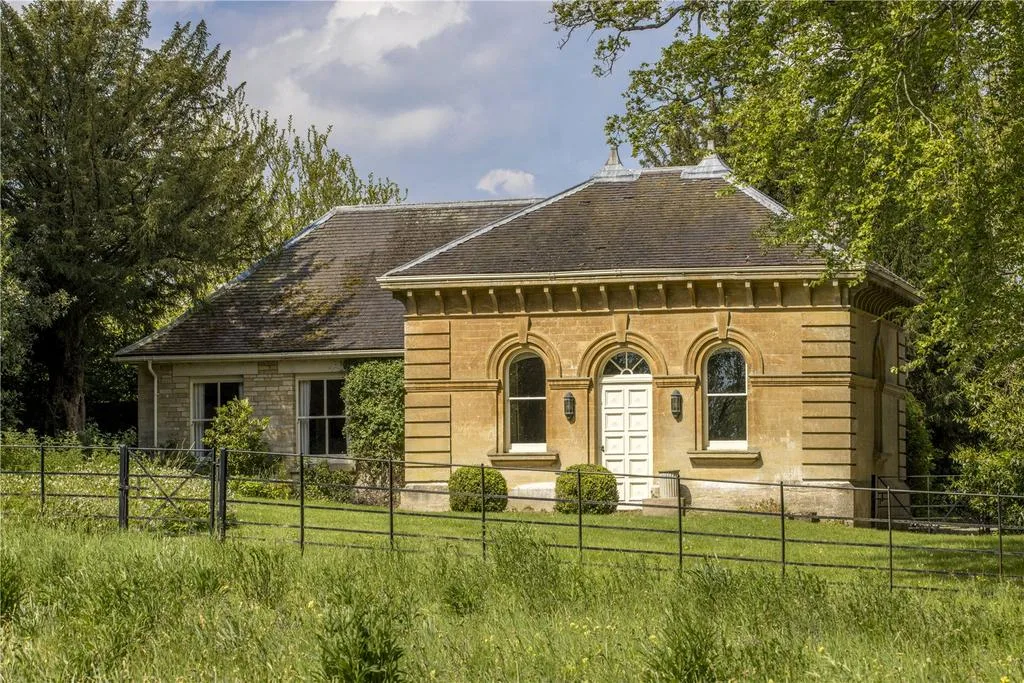
The Dairy is a charming one-bedroom cottage set within its own garden, enjoying a quiet woodland outlook. Nearby, the Stone Barn Cottages provide further accommodation, including a studio or one-bedroom cottage and a separate two-bedroom dwelling. These buildings offer independence and privacy while remaining visually and functionally connected to the main house.
A substantial former indoor tennis court – now a vast barn of nearly 3,000 sq ft – provides exceptional flexibility, whether for vehicle storage, equipment, or future adaptation. Together, these structures reinforce the estate’s capacity to function as both a private residence and a multi-use country setting.
The East and West Wings, which adjoin the principal house, contain six apartments held on long leasehold arrangements. They form part of the broader architectural composition, contributing to the sense of a living estate rather than a single isolated dwelling.
Gardens, Parkland and Capability Brown’s Vision
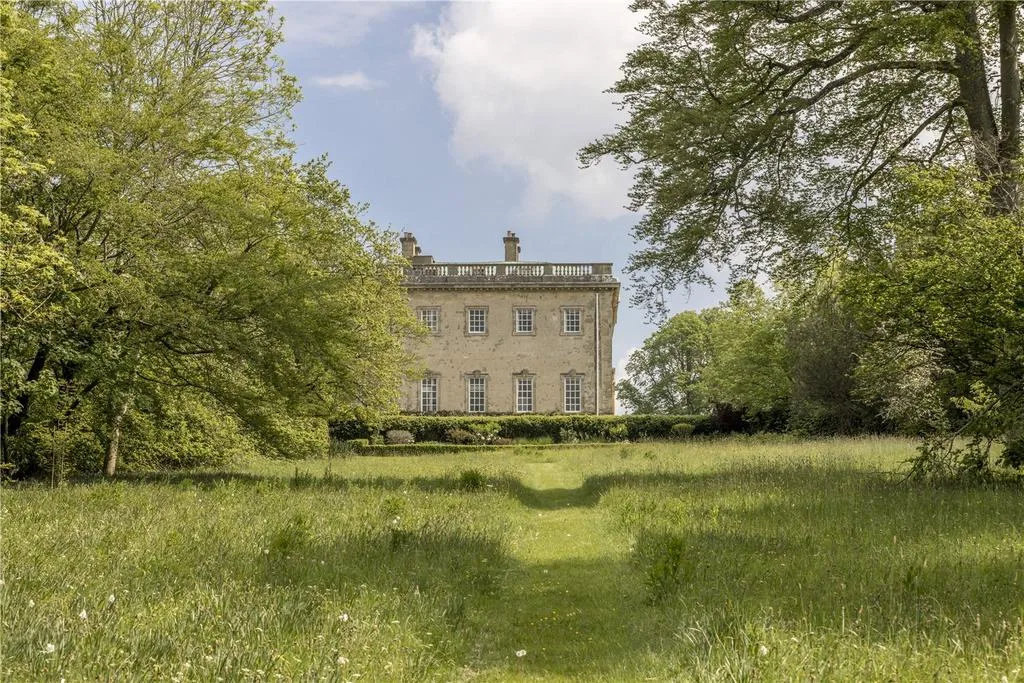
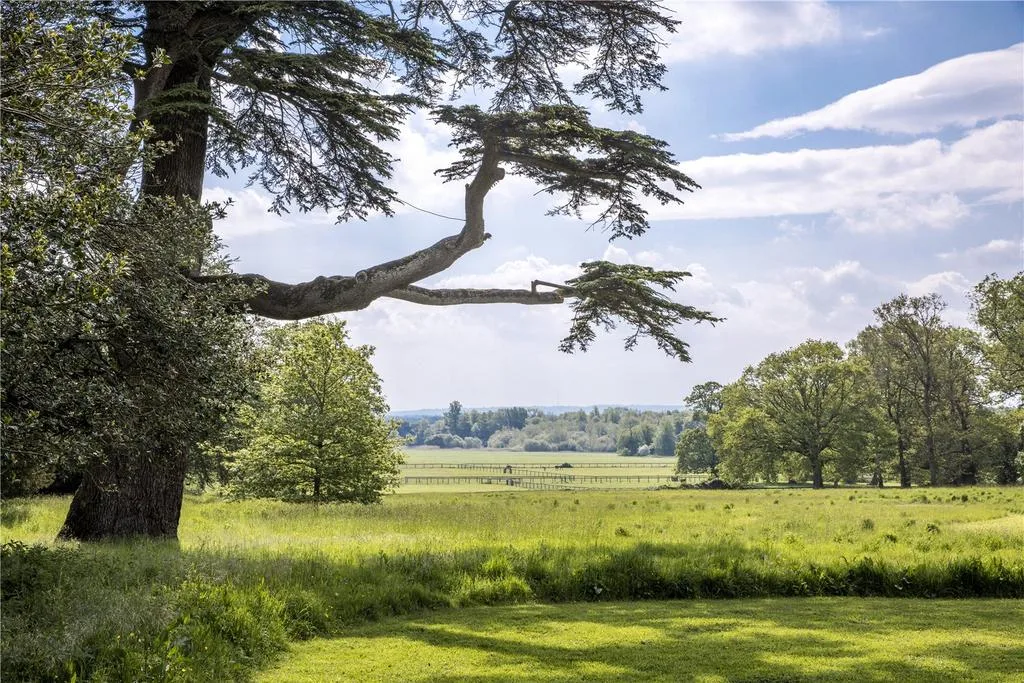
The landscape at Kirtlington Park is as significant as the house itself. Extending to approximately 29 acres, the grounds are an accomplished example of English landscape design, shaped within the traditions of Capability Brown’s naturalistic aesthetic.
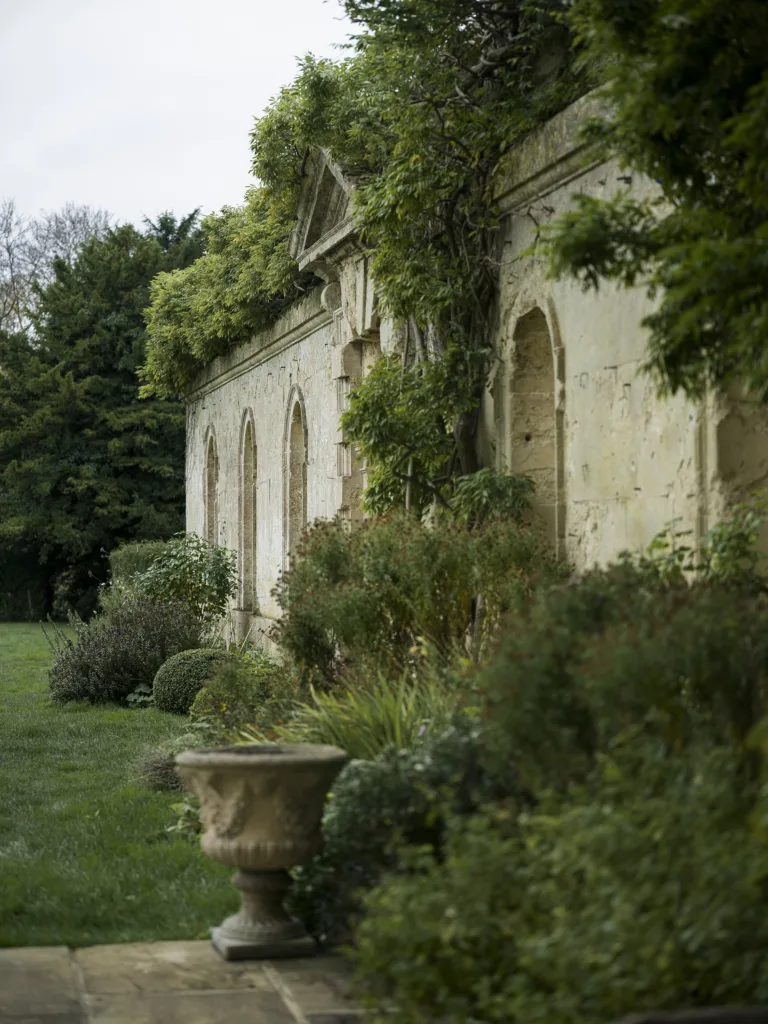
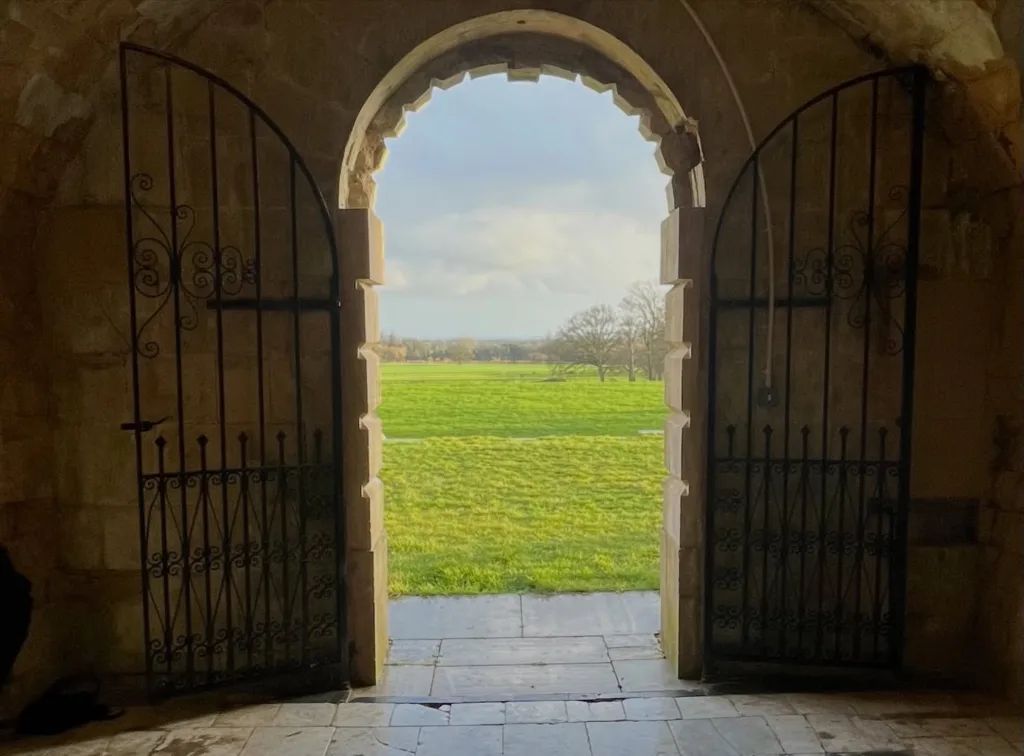
South-facing lawns fall gently away from the house into a sequence of meadows, parkland and woodland rides. The effect is one of continuity rather than boundary – the formal gardens dissolving into a wider pastoral landscape that feels both composed and unforced.
Herbaceous borders and ornamental planting introduce seasonal colour and structure close to the house, while mature trees and sheltered glades provide depth, privacy and shifting light. In the distance, the landscape opens towards the Chiltern Hills, with long views that reinforce the house’s sense of place within the wider Oxfordshire countryside.
A distant lake, designed in the spirit of Capability Brown, introduces a final compositional flourish – a visual anchor that draws the eye outward and reinforces the illusion of boundless parkland.
A Connected but Secluded Location
Despite its seclusion, Kirtlington Park is remarkably well-connected. The village of Kirtlington sits on its doorstep, offering a traditional Oxfordshire community with a parish church, village hall, primary school and two well-regarded pubs.
Oxford lies within easy reach, as do Woodstock, Bicester and Banbury, each offering their own cultural and commercial amenities. Rail connections from Oxford, Oxford Parkway and Bicester provide direct routes to London Marylebone and Paddington, placing the capital within convenient commuting distance.
The M40 ensures swift road access to London, Birmingham, and the wider motorway network, while Heathrow Airport is easily reached for international travel. Oxford Airport lies just a short drive away. This balance – rural tranquillity with metropolitan access – is part of what makes the location so compelling.
A Landscape of Culture, Sport and Country Life
The surrounding area offers a concentration of some of the country’s most established cultural and sporting destinations. Blenheim Palace and Woodstock lie nearby, alongside the curated rural lifestyle offerings of Soho Farmhouse and Estelle Manor.
For sport and leisure, the options are equally varied: racing at Cheltenham and Newbury, motorsport at Silverstone, polo at Kirtlington Park Polo Club, and golf at Frilford Heath and Wychwood. The surrounding countryside supports walking, riding, fishing and traditional field sports, ensuring year-round engagement with the landscape.
A Rare Architectural Offering
Kirtlington Park is more than a stately home; it is a complete architectural and landscape composition of exceptional quality. Few houses in England combine such significant Palladian design, such intact historic interiors and such a carefully evolved modern infrastructure.
It is a place where scale is matched by restraint, and where grandeur is tempered by intimacy. A house of formal certainty, softened by the quiet rhythm of contemporary life.
In the context of Oxfordshire’s country house tradition, Kirtlington Park stands not only as a survivor of the Georgian era, but as one of its most fully realised expressions – a home that continues to live, entertain and evolve within a landscape that feels at once designed and entirely natural.
Gallery
Click to enlarge
The post Inside Homes: Kirtlington Park – A Palladian masterpiece in the Oxfordshire countryside appeared first on The Oxford Magazine.
from The Oxford Magazine https://ift.tt/NOIXTn8
via IFTTT
Comments
Post a Comment