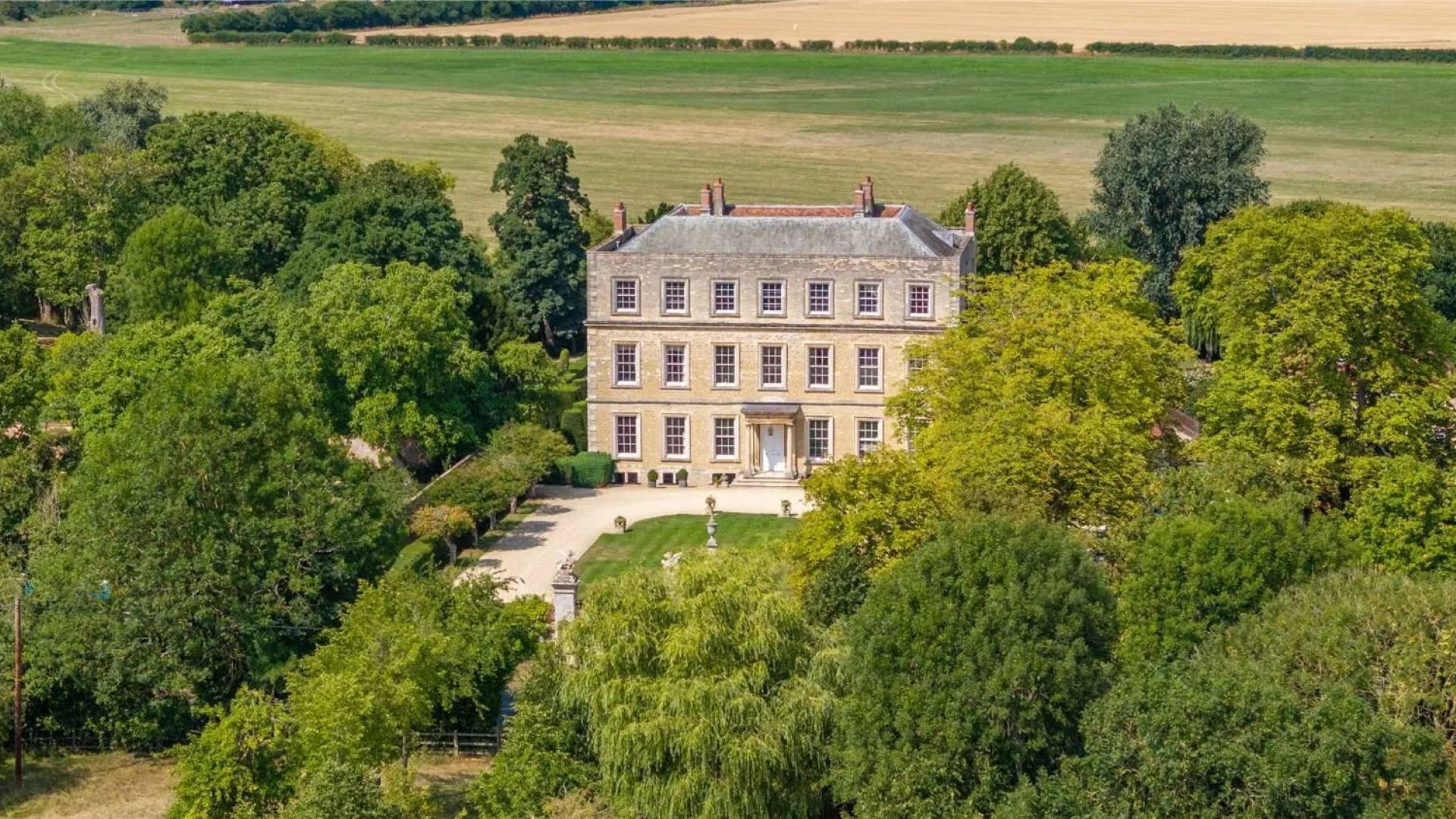
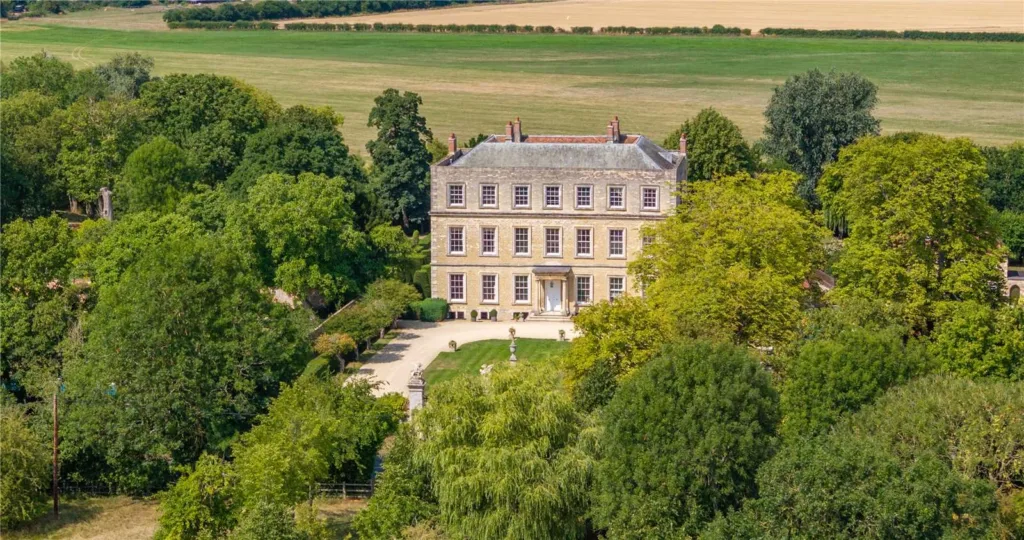
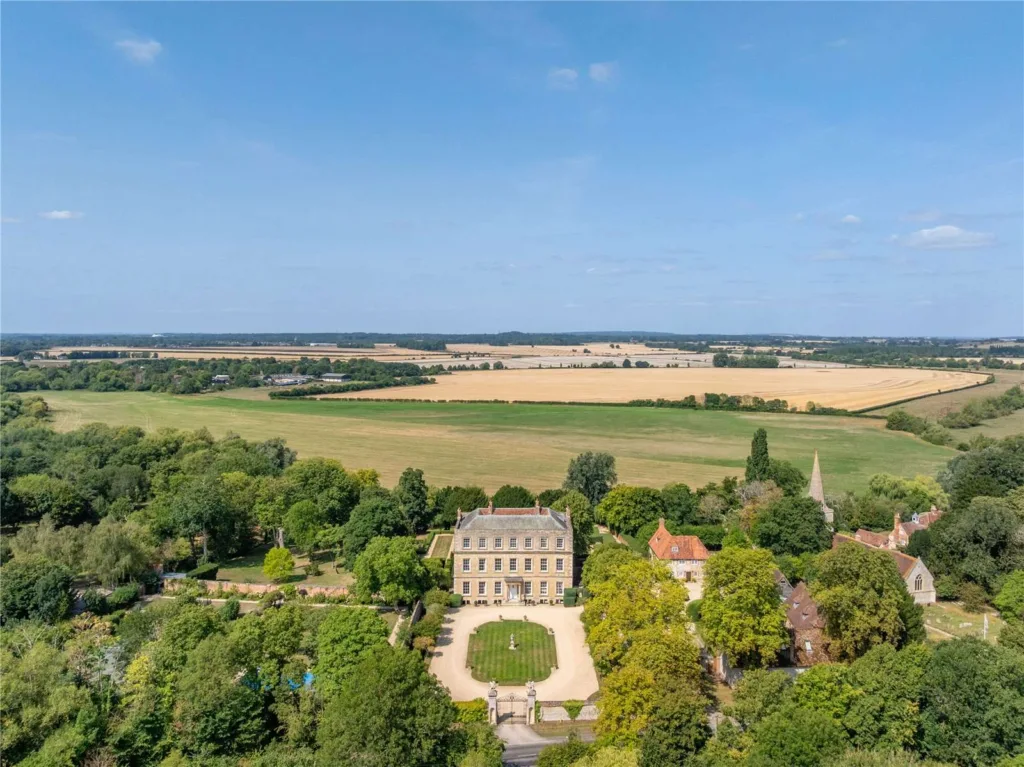
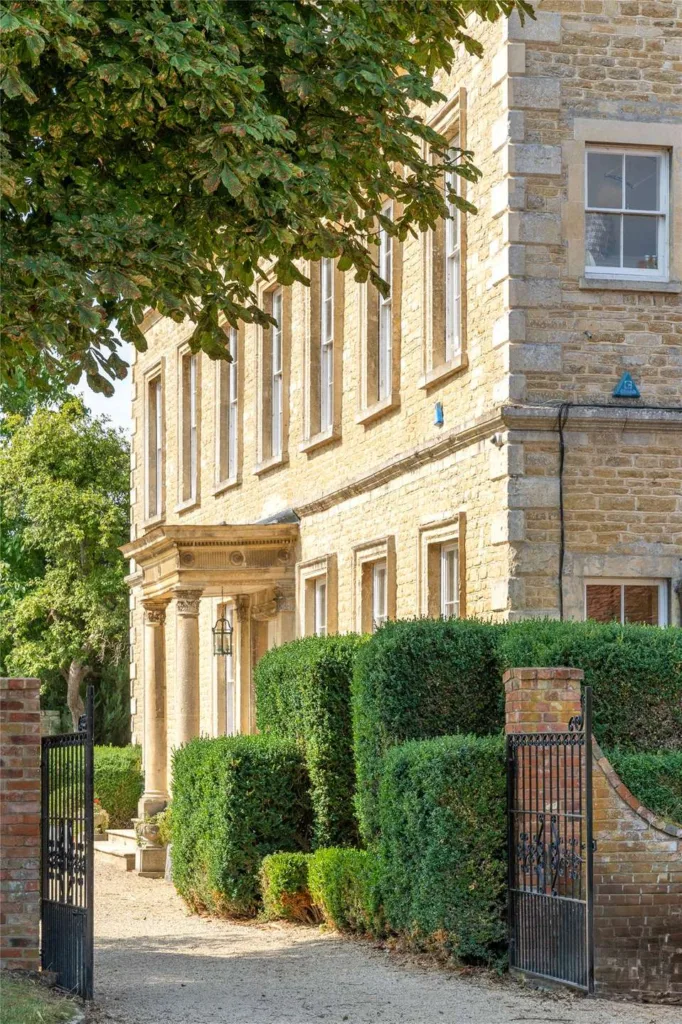
Approached along a sweeping gravel drive and framed by wrought iron gates, Newington House unfolds gradually rather than announcing itself. Set on a gentle rise above the River Thame, this Grade II* 17th-century limestone house sits at the heart of a wider estate that feels both composed and untamed — formal gardens giving way to meadow, woodland and water, with the river threading quietly through it all.
Just outside the village of Newington near Wallingford, the estate occupies a notably private position in unspoilt south Oxfordshire countryside, yet remains within easy reach of Oxford and the Thames Valley’s main connections. That balance of seclusion and accessibility has long defined its appeal.
A house with continental ambition and literary echoes
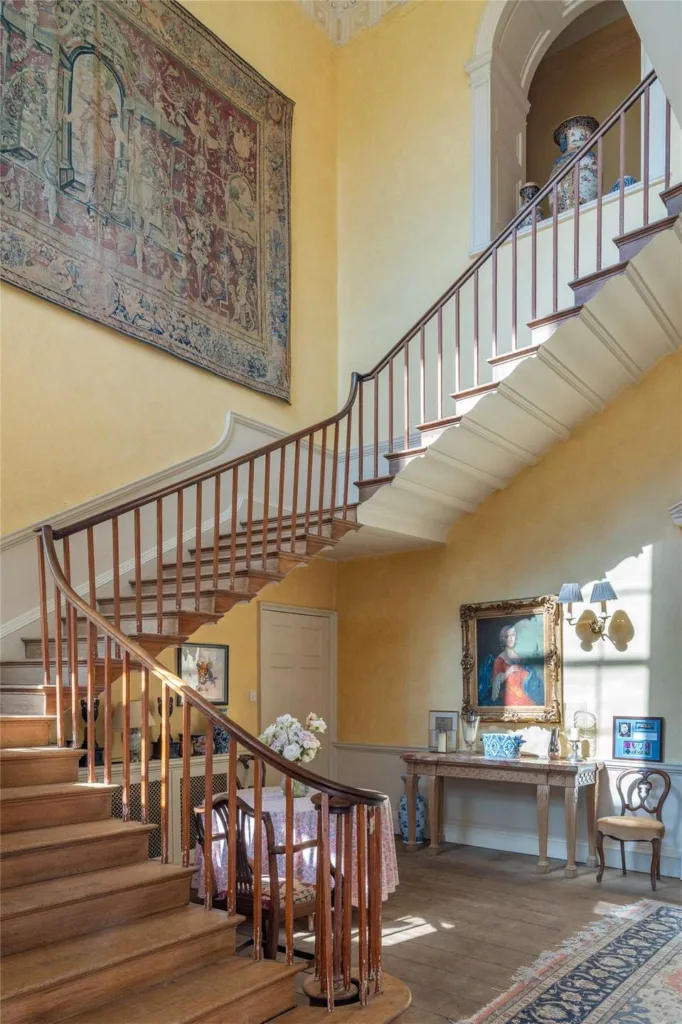
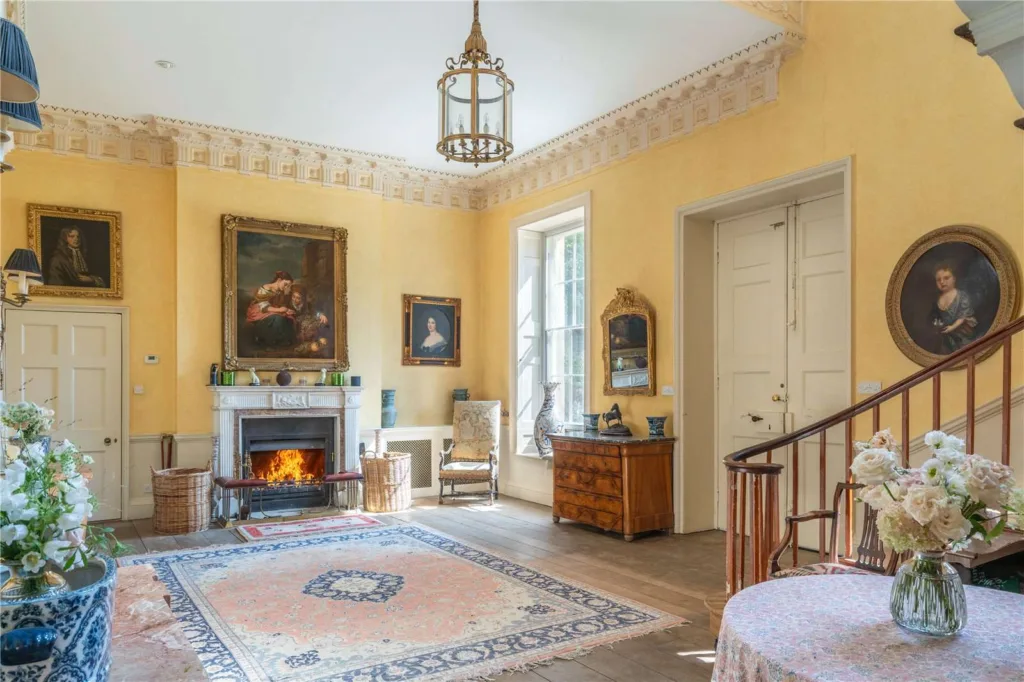
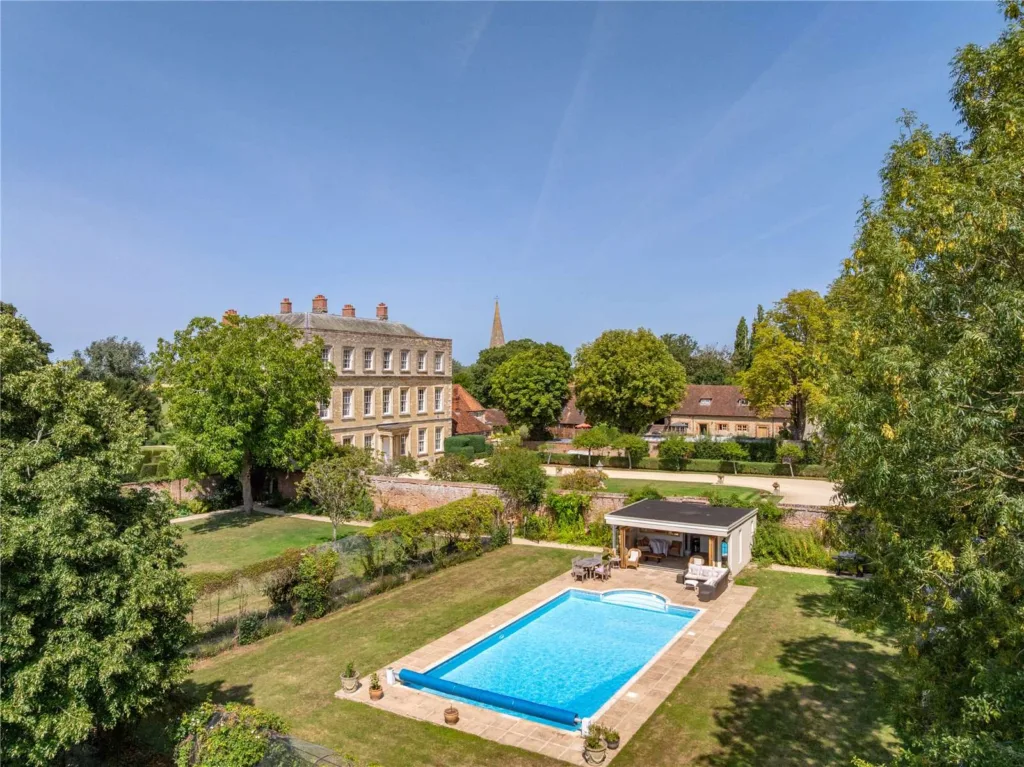
Newington House was originally conceived as something unusual for its time: a 17th-century limestone “palazzo”, reportedly built as a gift for an Italian princess and inspired by the grand palaces of Genoa. Its proportions remain unmistakably European in ambition — a Corinthian porch giving way to a soaring entrance hall, and a sequence of west-facing reception rooms designed to draw the eye out towards terrace and landscape beyond.
In the early 20th century, the house entered a different cultural orbit entirely under the ownership of artist and hostess Ethel Sands. It became a discreet but influential gathering place for writers and thinkers of the period, including Henry James and Arnold Bennett, as well as members of the Bloomsbury Group, among them Virginia Woolf. That legacy lingers less in overt display than in atmosphere — a sense that this is a house long accustomed to conversation, creativity and gathering.
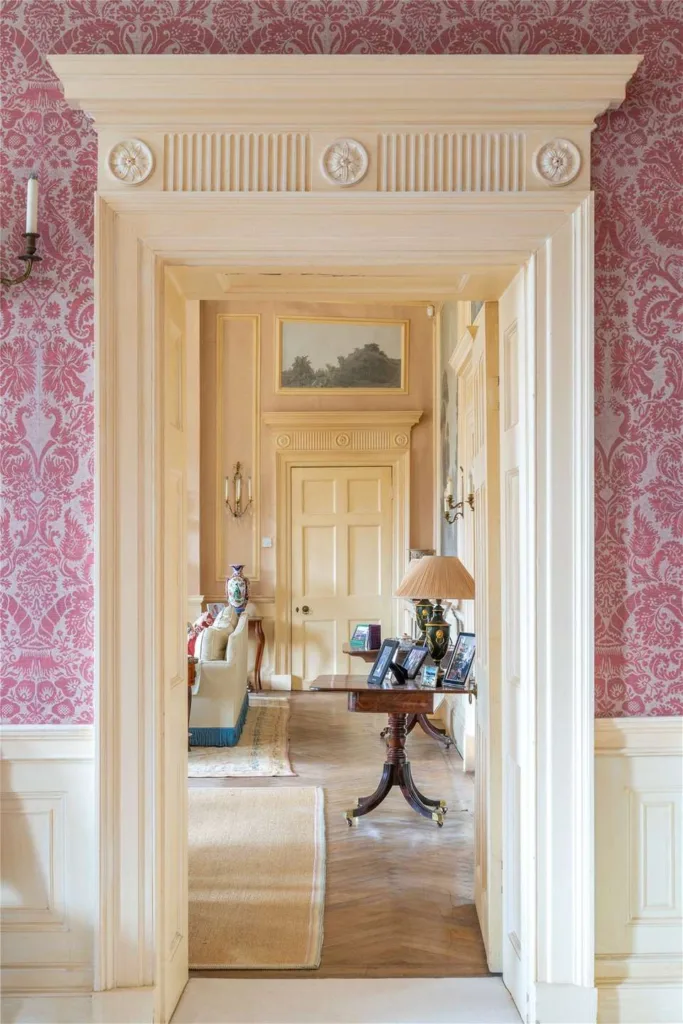
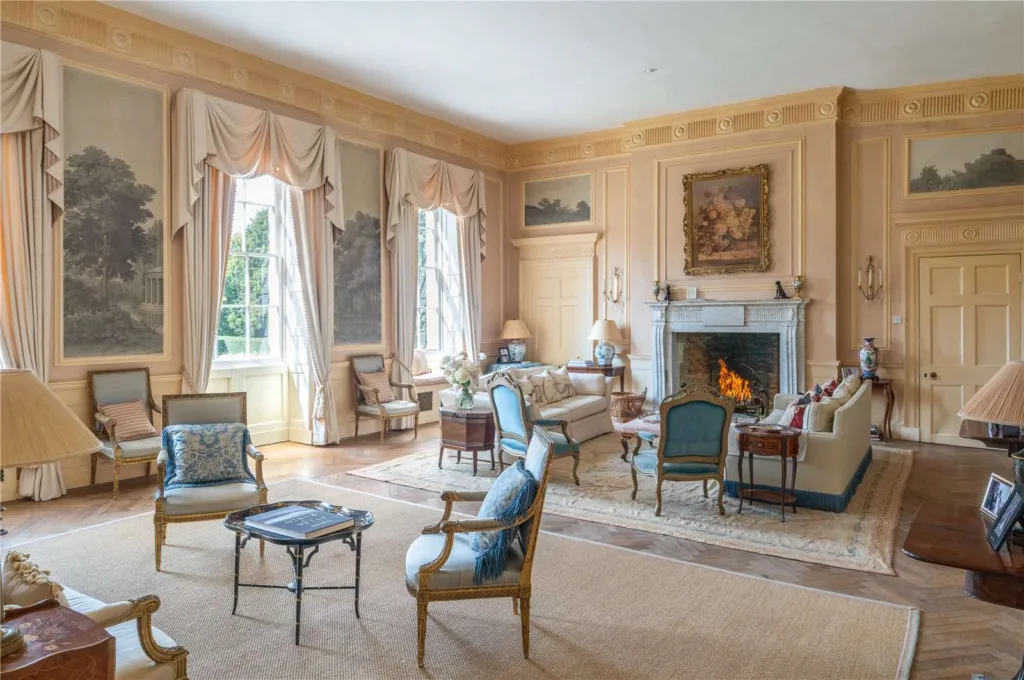
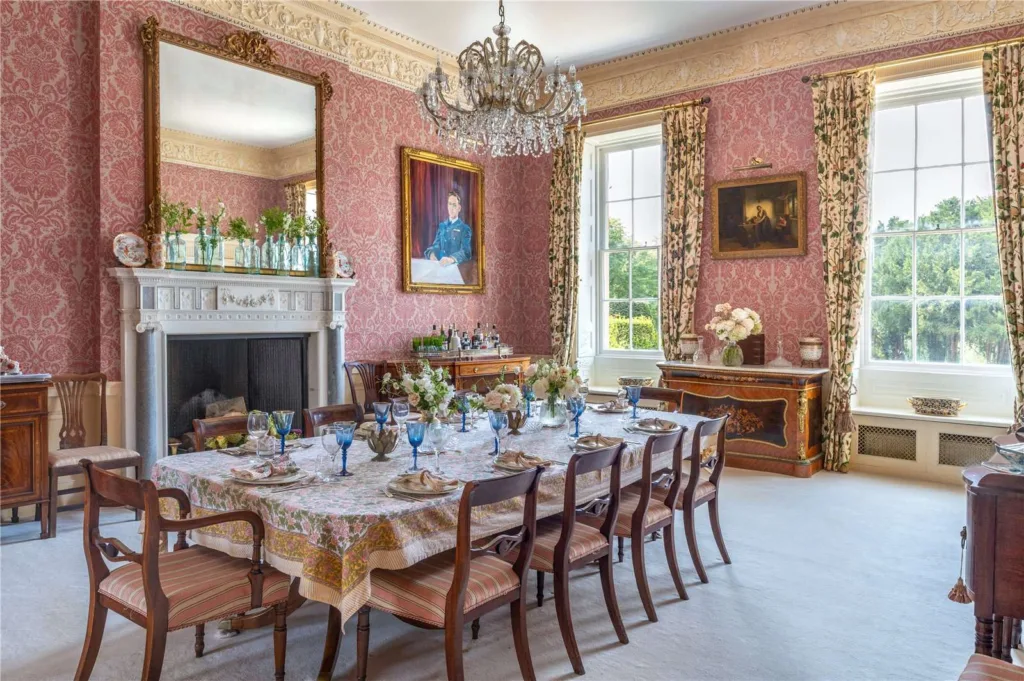
Inside, scale and light dominate. High ceilings, sash windows and marble fireplaces give the principal rooms a calm formality, while long sightlines draw the eye through the building and out to the gardens. The reception rooms open directly onto terraces, blurring the threshold between interior and landscape in a way that feels entirely intentional.
A house designed for both grandeur and retreat
While the principal floors provide a sequence of elegant entertaining spaces, the lower ground level introduces a more private, almost self-contained rhythm to the house. Here, a gym, reception room, gun room, wine storage and games room sit alongside a full-sized snooker table said to have been associated with Winston Churchill’s wartime rooms — a curious and characterful detail that adds to the estate’s layered history.
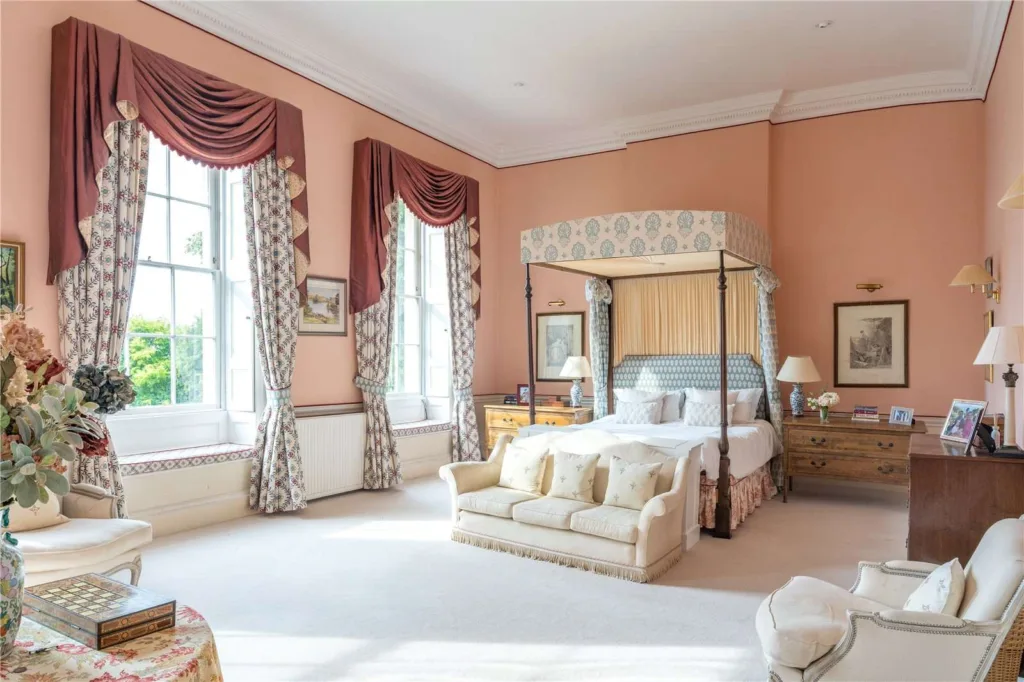
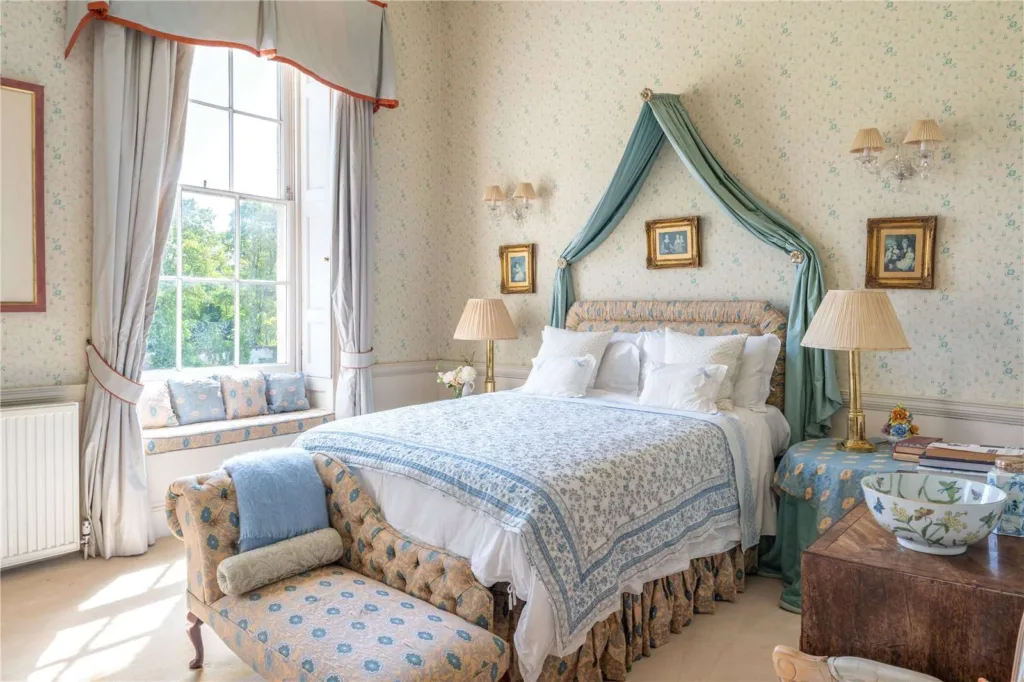
Upstairs, the principal suite occupies a commanding position, supported by two guest suites, with a further series of bedrooms above. The effect is one of generous accommodation that still feels coherent — a house capable of hosting at scale without losing its sense of domesticity.
A self-contained annexe provides additional flexibility, with its own sitting room, kitchen, three bedrooms and bathroom, making it equally suited to extended family, guests or independent occupation within the estate.
Beyond the main house: a multi-residence estate
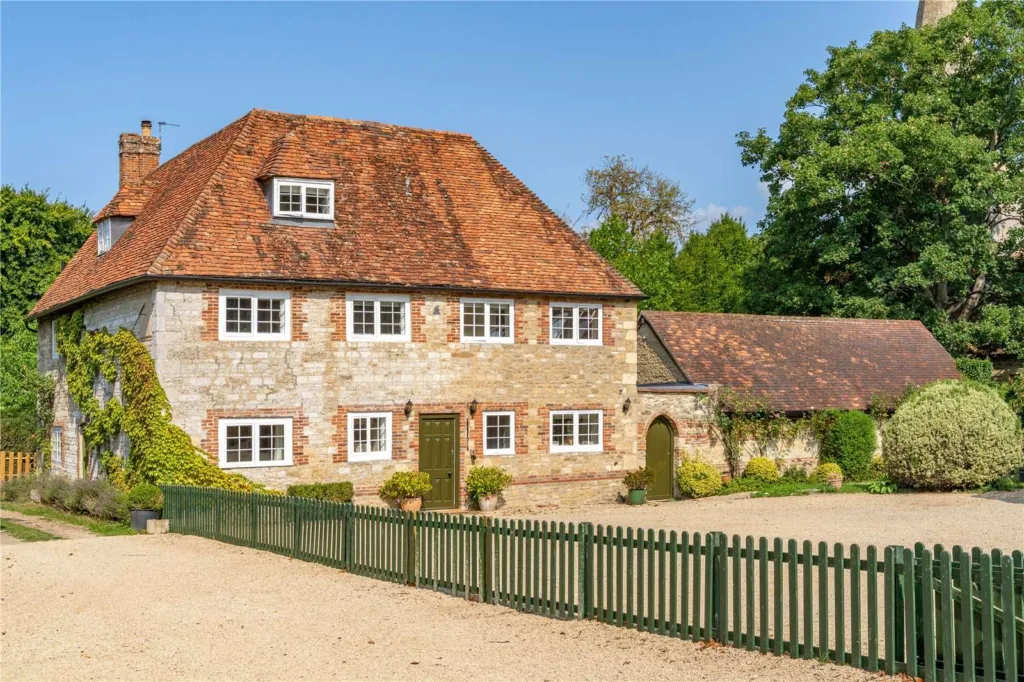
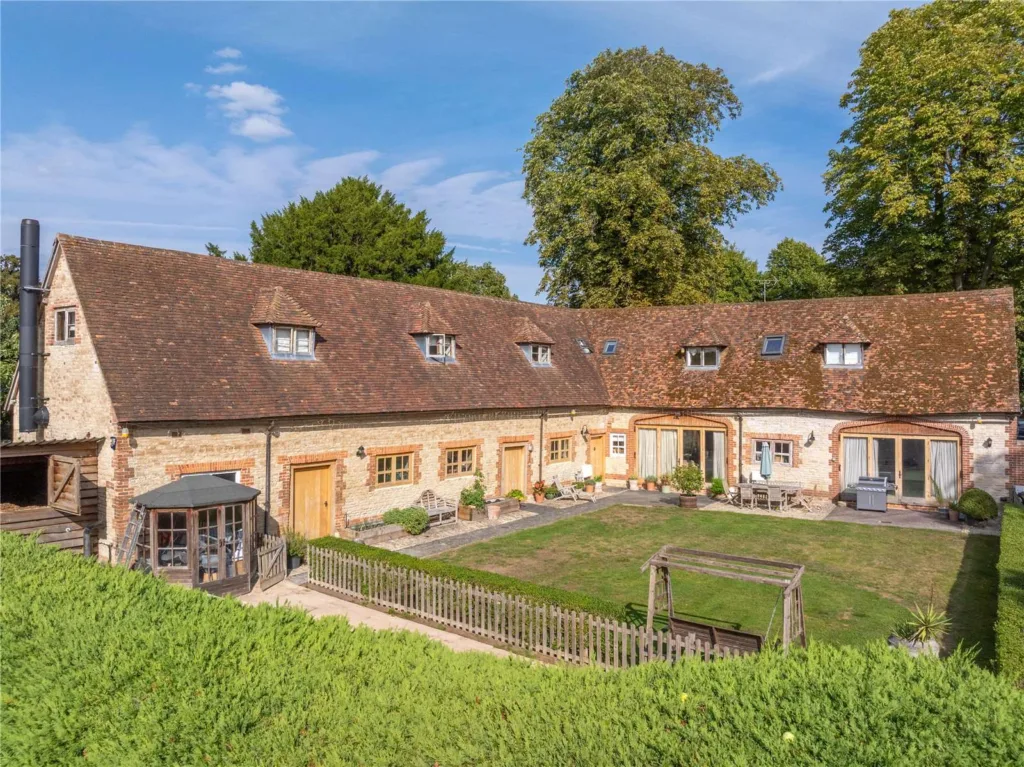
Newington House is not a single dwelling so much as a small private world. Alongside the principal residence sit two further homes: The Manor House and The Coach House.
The Manor House, itself a Grade II listed 17th-century stone property, offers five bedrooms and four bathrooms along with three reception rooms. The Coach House provides further accommodation with four bedrooms and three bathrooms, complemented by two reception rooms and a kitchen — a configuration that lends itself naturally to staff, guests or multi-generational living.
Together, these buildings create an estate that is both unified and adaptable, able to function as a single country seat or as a collection of independent residences within one private boundary.
Gardens, water and a working landscape
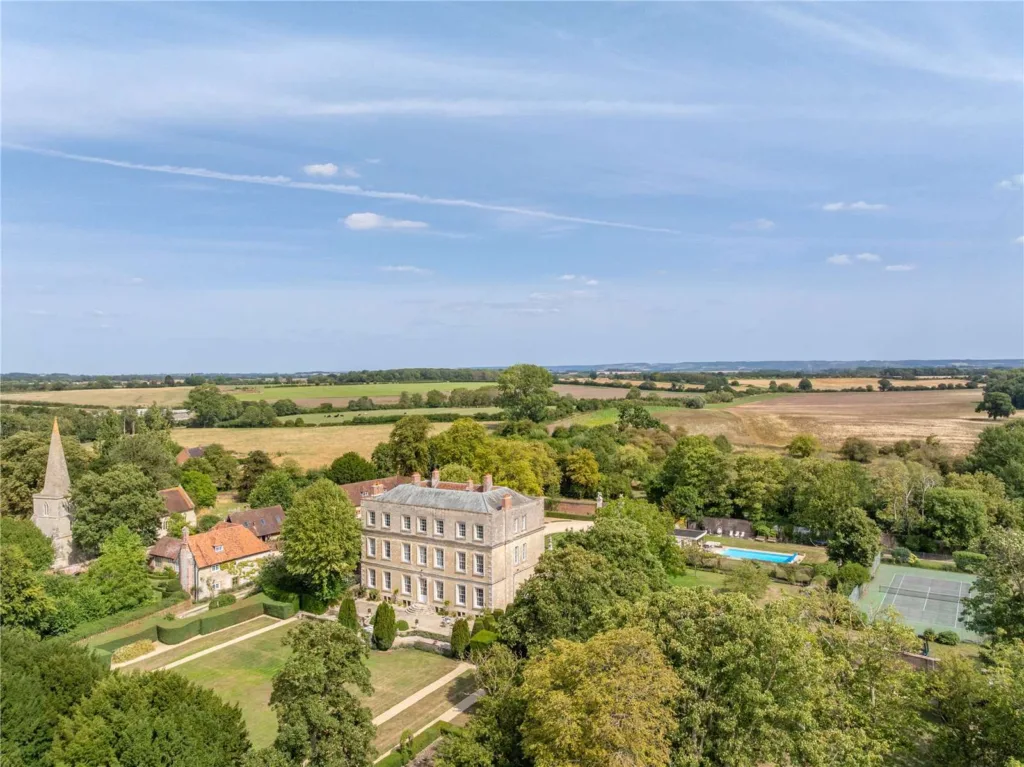
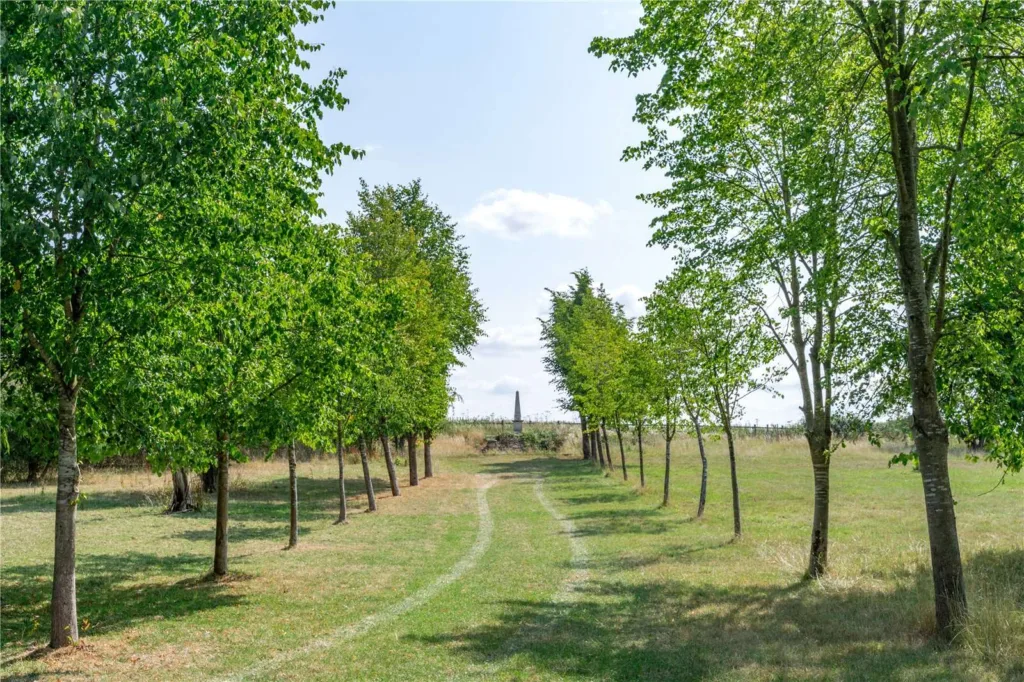
The grounds at Newington are as significant as the architecture. Formal lawns and terraces close to the house give way to a series of distinct garden “rooms”: a walled garden, Italian garden, rose garden, orchard and greenhouse, each with its own character and seasonal rhythm.
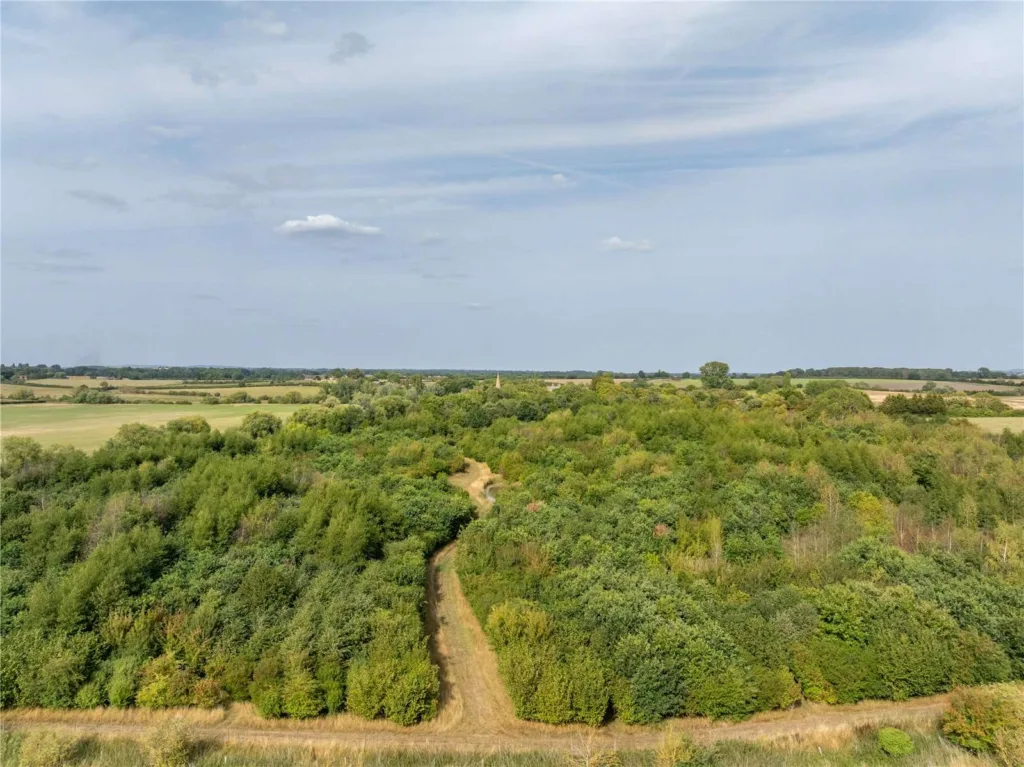
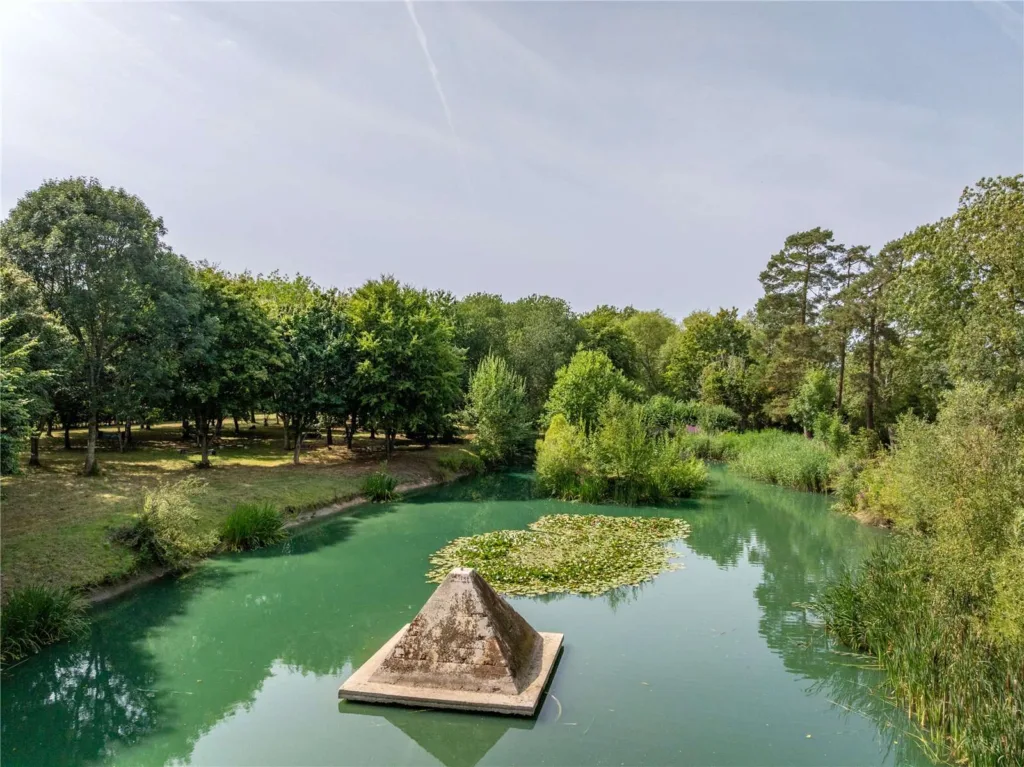
Beyond these cultivated spaces, the land opens into woodland walks, paddocks and meadow. A heated swimming pool and hard tennis court sit comfortably within the landscape, while a boating lake with an island introduces a more romantic, almost theatrical element to the grounds.
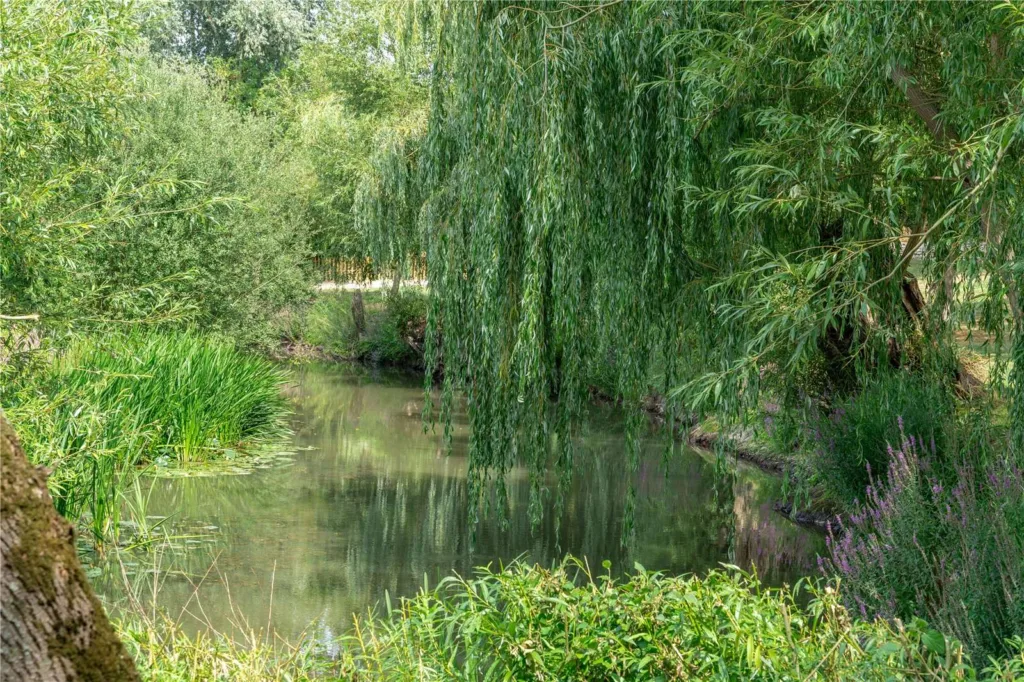
The River Thame runs through the wider 43-acre estate, reinforcing the sense of continuity between garden and countryside. Historically a sporting estate, Newington retains the infrastructure — including four stables, tack room, and hay and feed barn — for equestrian use, with paddocks extending into the surrounding landscape.
This is a setting that has clearly evolved over time rather than been imposed upon it. Formality near the house gives way to softness and movement further out, where woodland and water begin to reclaim the edges.
A rare continuity of scale and setting
What distinguishes Newington House is not any single feature, but the accumulation of them: architecture with continental ambition, literary and artistic history, multiple dwellings, and a landscape of unusual breadth and variety. It is rare to find a 17th-century country house that has expanded into such a complete estate without losing coherence.
In total, the property extends to approximately 43 acres, yet it reads less as acreage than as a sequence of connected worlds — garden, parkland, water, and house — each distinct, yet carefully held together.
For those drawn to estates where history is not preserved as a static backdrop but lived within and around, Newington House offers something increasingly uncommon: a country place with both presence and potential, deeply rooted in Oxfordshire’s landscape yet shaped by centuries of layered influence.
Newington House is on the market via Savills at a guide price of £14,250,000.
Gallery
The post Inside Homes: Newington House – A 17th-century palazzetto in 43 acres of gardens and woodland appeared first on The Oxford Magazine.
from The Oxford Magazine https://ift.tt/puasfQc
via IFTTT
Comments
Post a Comment